Which Side of Mumbai Is Better to Live On?
WEH Vs EEH
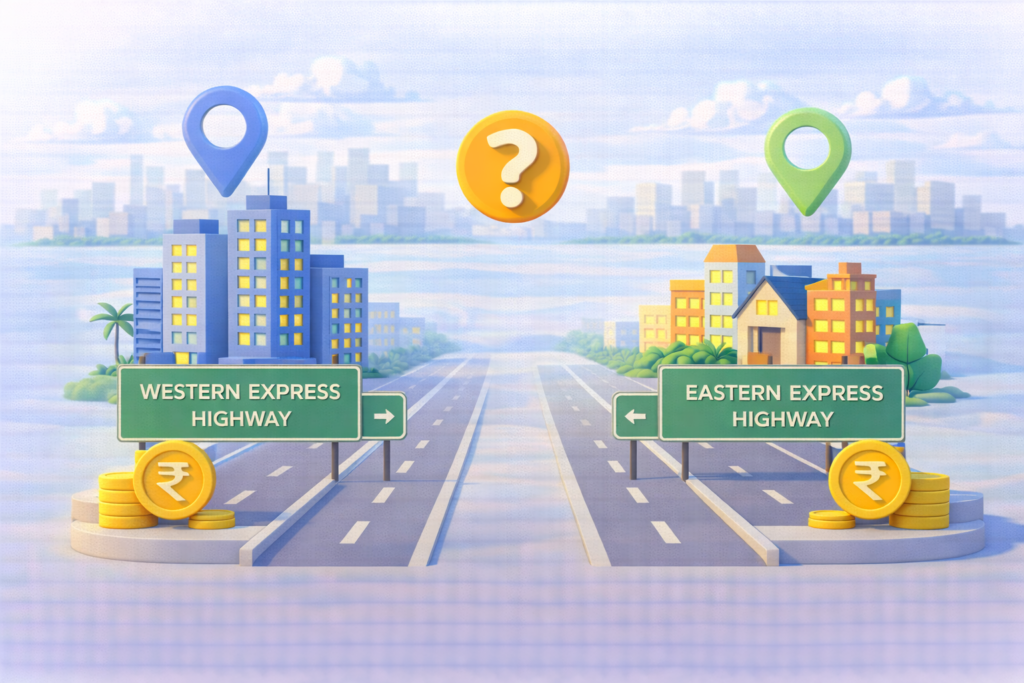
Table of Contents
The choice between Western Express Highway and Eastern Express Highway shapes daily life more than most buyers realise.
If you are deciding Mumbai east or west, the western side generally offers a better lifestyle, higher resale demand, and stronger rental markets.
The eastern side offers better affordability, shorter commutes to central business districts, and improving infrastructure.
What you should remember:
The West gives comfort and liquidity. East gives value and practicality. The right side depends on how you live and work.
If you’re confused between Mumbai’s East and West, you’re not alone.
Also Read: Western Suburbs vs Eastern Suburbs
Almost every serious buyer in the city reaches this point.
Friends say “West is better.”
Brokers say “East is developing fast.”
Budgets say “Be practical.”
Somewhere in between, you’re trying to figure out what actually works for you.
Let’s step away from opinions and look at this like someone who has travelled these roads, lived in these areas, and dealt with traffic, rentals, and resale realities.
Understanding What “East” and “West” Really Mean in Mumbai
In Mumbai, the railway line is the real divider.
On one side is the Western corridor, supported by the Western Express Highway.
On the other side is the Central corridor, supported by the Eastern Express Highway.
These highways influence:
- Connectivity
- Property pricing
- Office access
- Lifestyle patterns
When people ask about mumbai east or west, they are really asking which ecosystem suits them better.
Living on the Western Express Highway Side of Mumbai
The western side of Mumbai has traditionally been more popular with home buyers.
It includes well-known residential belts and strong social infrastructure.
When you live closer to the Western Express Highway, you usually benefit from:
- Better access to business districts and airports
- More developed residential neighbourhoods
- Strong retail, schools, and hospitals
- Higher rental demand
This side has evolved over decades as a preferred residential zone.
Also Read: Renting vs Buying in Mumbai
Why this matters
Areas that people have trusted for years tend to hold value better and attract tenants faster.
Advantages of Living on the Western Side of Mumbai
If you choose the western corridor, you usually get:
- Easier access to corporate hubs
- Better lifestyle amenities
- Higher resale liquidity
- Strong professional tenant base
This is why many people automatically lean towards the west when buying.
A home here feels “safe” in both emotional and financial terms.
Limitations of the Western Side of Mumbai
The downside is cost.
Western-side properties are expensive.
Entry prices are high.
Space is limited.
Traffic congestion is also intense in many pockets, especially near commercial zones.
You often pay more for location than for actual living comfort.
In simple terms: you buy convenience, not spaciousness.
Living on the Eastern Express Highway Side of Mumbai
The eastern corridor has changed dramatically in the last decade.
Earlier seen as industrial or secondary, it is now home to many large residential projects and improving infrastructure.
Living near the Eastern Express Highway gives you:
- Better access to central Mumbai
- Faster routes to business districts like BKC and Lower Parel
- More affordable housing options
- Newer townships and societies
For many practical buyers, this side makes financial sense.
Also Read: Packers and Movers Charges
Advantages of Living on the Eastern Side of Mumbai
The biggest strength of the east is value.
You generally get:
- Larger homes for the same budget
- Newer buildings
- Better amenities in many projects
- Less pressure on pricing
For middle-income families and first-time buyers, this can be a major advantage.
Why this matters
Lower financial stress improves quality of life more than many people realise.
Limitations of the Eastern Side
The east still faces perception issues.
Some pockets are crowded.
Social infrastructure is uneven.
Rental demand is improving but not uniform.
In certain areas, markets, schools, and hospitals are still developing.
Location selection becomes very important here.
Mumbai City vs Mumbai Suburban: How This Fits In
When people compare mumbai city vs mumbai suburban, they are often mixing two things: work location and residence.
Mumbai city areas are closer to historic business zones, while suburban areas offer more residential options.
Both highways serve suburban Mumbai more than the core city.
Most buyers today live in suburbs and commute.
So the real question is:
Which suburban side makes your daily life easier?
Commute and Work Location Impact
This is where many decisions should start.
Your work location should strongly influence whether you choose the eastern or western corridor.
If you work in:
- Western suburbs, media, IT, airport zones → West suits better
- BKC, Lower Parel, Central Mumbai → East often works better
Choosing the wrong side can add years of commuting stress.
Price Comparison: East vs West
Properties on the western corridor are generally more expensive than those on the eastern corridor.
Broadly:
- West = higher price, higher demand
- East = better value, improving demand
This gap exists because of historical development patterns.
It is narrowing, but slowly.
Rental and Resale Performance
Rental and resale matter even if you plan to live in the house.
Western side:
- Faster rentals
- Higher tenant demand
- Quicker resale
Eastern side:
- Improving rentals
- Slower resale in some pockets
- More dependent on micro-location
If flexibility matters to you, the west feels safer.
Who Should Prefer the Western Mumbai
Living near the Western Express Highway suits you if:
- You value lifestyle and convenience
- You may rent out in future
- You want easier resale
- Budget is comfortable
This suits professionals, investors, and buyers with higher purchasing power.
Who Should Prefer the Eastern Mumbai
Living near the Eastern Express Highway suits you if:
- You want better value
- You prefer larger homes
- You work in central Mumbai
- You want lower EMIs
This suits first-time buyers, families, and long-term end-users.
The Importance of Micro-Location
This cannot be stressed enough.
In both corridors:
- One station makes a big difference
- One road changes livability
- One bad junction increases stress
A good eastern pocket can outperform a weak western one.
Always judge the exact location, not just “East” or “West”.
Practical Takeaways
- Choose based on work location first
- Check budget comfort before lifestyle preferences
- Visit areas during peak hours
- Study rental and resale trends locally
- Never buy only on reputation
If you remember only one thing:
Daily commute matters more than area prestige.
Conclusion
The question of Western Express Highway vs Eastern Express Highway is not about which side is “better”.
It is about which side fits your life.
The west gives convenience, reputation, and liquidity.
The east gives value, practicality, and improving infrastructure.
Both can work well.
Both can disappoint if chosen carelessly.
A good home in the right location on either side will serve you better than a “prestigious” address that strains your finances or patience.
If this has helped you think more clearly and calmly, you’re already approaching your decision the right way.
1. Is the western side of Mumbai always better to live on?
Not always, but it feels that way for many buyers.
The western side, supported by the Western Express Highway, has historically offered better lifestyle infrastructure, stronger rental demand, and easier resale. This makes it feel safer.
However, “better” depends on your work location, budget, and daily routine. For many practical buyers, the eastern side works just as well—or better.
2. When people ask “Mumbai east or west”, what are they really asking?
They are usually asking three things:
- Which side has better daily commute?
- Which side is more liveable long term?
- Which side holds property value better?
The answer changes based on where you work, how much you earn, and whether you prioritise comfort or convenience.
3. Is living near the Eastern Express Highway cheaper than the western side?
Yes, properties near the Eastern Express Highway are generally more affordable than those near the Western Express Highway.
For the same budget, the eastern side often offers:
- Larger homes
- Newer buildings
- Better amenities
This price difference is one of the biggest reasons buyers seriously consider the east.
4. Does the western side have better resale value?
In most cases, yes.
Homes on the western side usually:
- Sell faster
- Attract more buyers
- Face less price negotiation
This is because demand has been consistently strong for decades. That said, a good eastern micro-location can still outperform a weak western one.
5. Which side is better for rental income?
Rental demand is generally stronger and more consistent on the western side of Mumbai.
The west attracts professionals, corporate tenants, and short-term renters.
The east has improving rental demand, especially near business hubs, but it is more location-dependent.
If rental income supports your EMI, the west usually feels safer.






Get In Touch
Write to us at:
help@justimaginerealty.in
© 2026 Just Imagine Realty. All Rights Reserved.