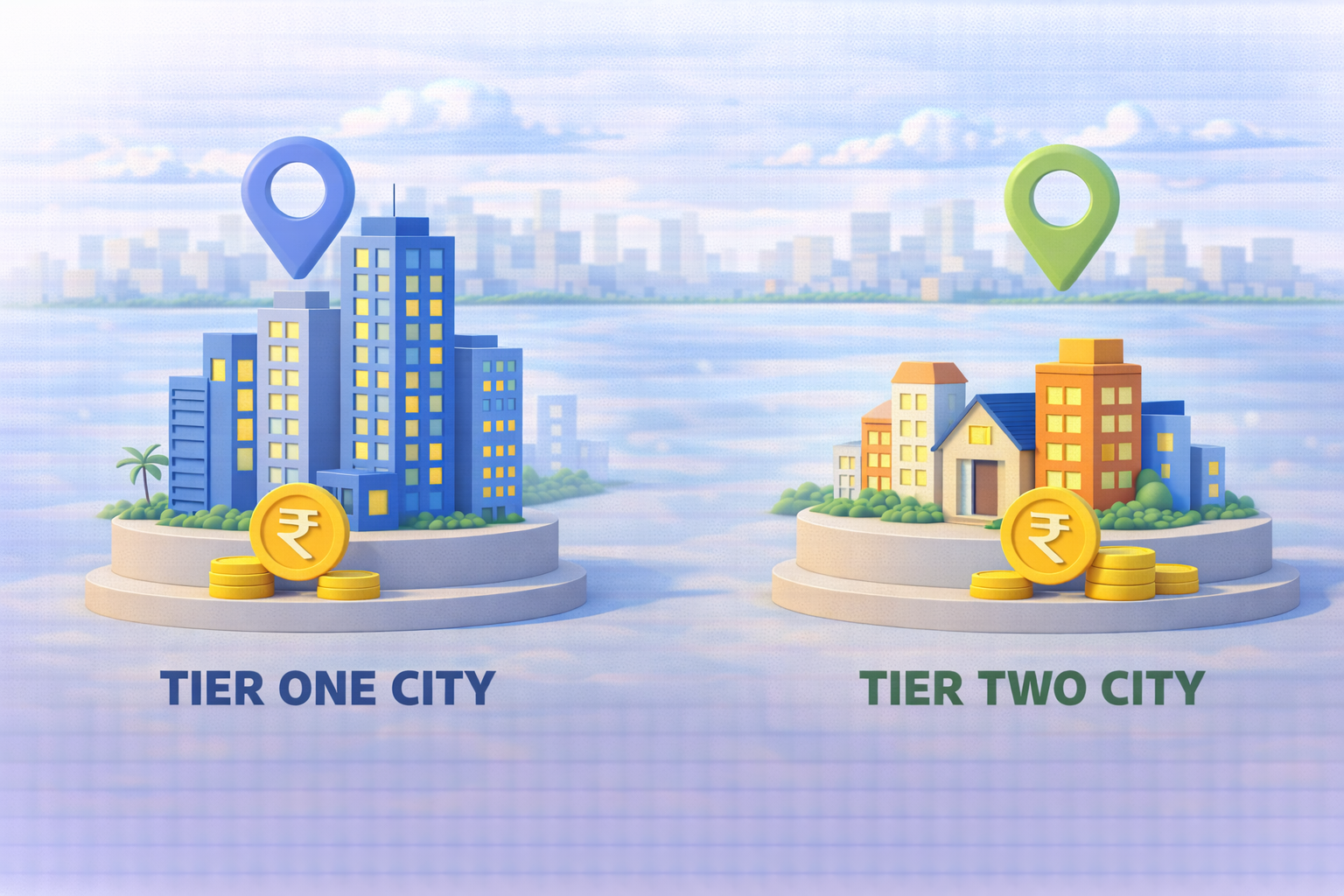
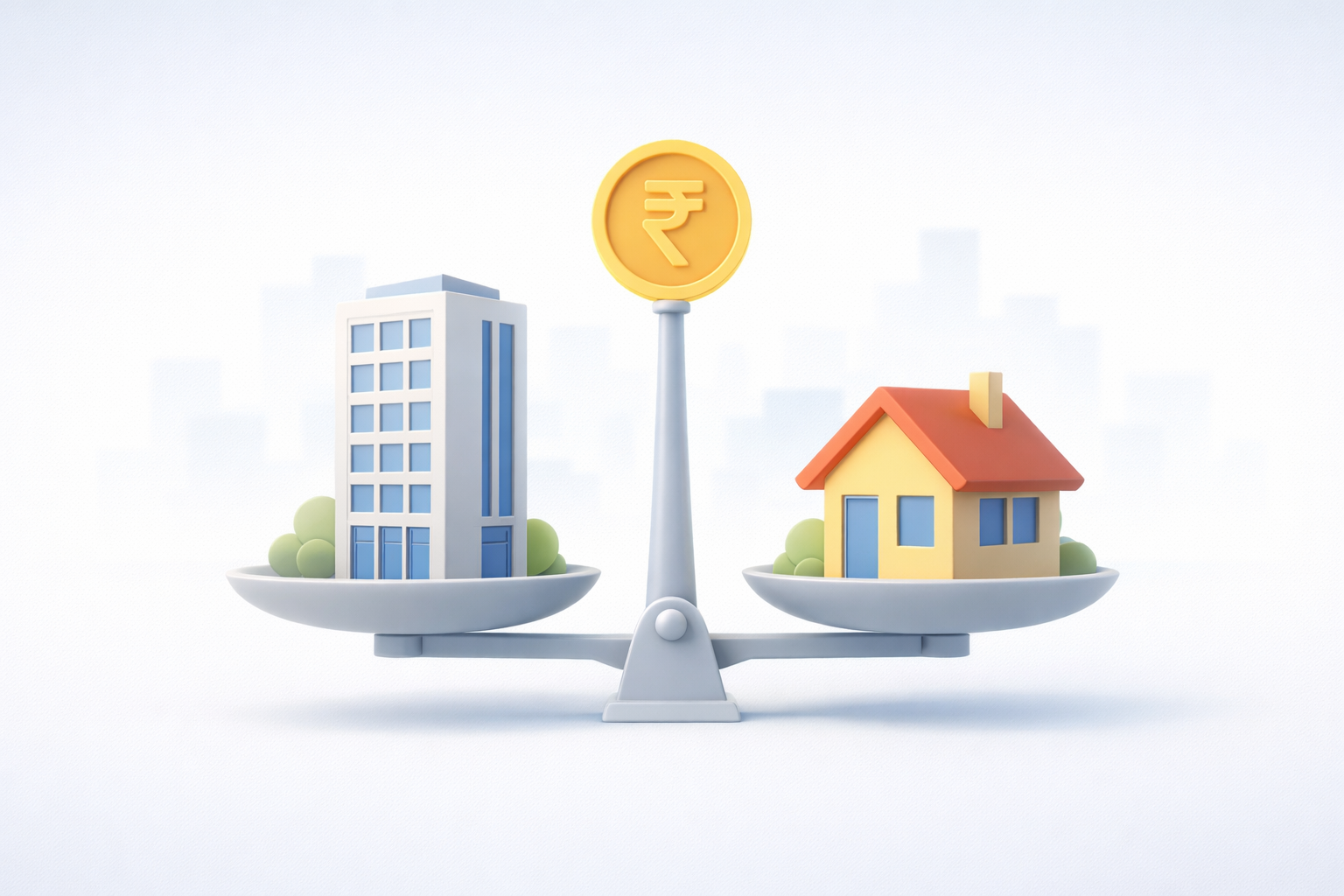
Tier 1 city vs Tier 2 city is no longer just a budget question it’s a timing and temperament question.
A tier 1 city offers stability, liquidity, and predictable demand but limited upside.
A tier 2 city offers affordability and growth potential, but requires patience and location discipline.
What to remember:
Tier I cities protect wealth. Tier II cities can grow wealth—if you enter early and hold long enough.
If you’re confused between Tier I and Tier II cities, you’re thinking correctly.
A decade ago, this choice was obvious. Today, it isn’t.
Work patterns have changed. Infrastructure has spread outward. Aspirations have shifted.
And yet, the risks haven’t disappeared—they’ve only changed shape.
So instead of asking “Which is better?”, let’s ask the smarter question:
Which one fits your money, timeline, and mental comfort?
What Do Tier I and Tier II Cities Actually Mean?
In India, the difference between a tier 1 city and a tier 2 city is not about prestige—it’s about economic maturity.
A tier 1 city typically has:
- Large, diversified job markets
- International connectivity
- Mature real estate prices
- High demand but limited new land
A tier 2 city usually has:
- Emerging industries and education hubs
- Lower property prices
- Infrastructure catching up
- A growing aspirational population
This difference defines how property behaves over time.
Also Read: Mumbai Property Rates
Why Tier I Cities Still Feel “Safe”
There’s a reason most people instinctively trust a tier 1 city.
You’re buying into:
- Established demand
- Strong rental markets
- Easier resale
Even during slowdowns, Tier I markets don’t freeze completely. Transactions slow—but they don’t vanish.
Why this matters
When you’re investing a large amount, emotional stability matters. Tier I cities reduce the risk of regret, even if they don’t deliver excitement.
The Reality Check on Tier I City Investments
Here’s the part buyers realise later:
- Entry prices are already stretched
- Rental yields are modest
- Appreciation is gradual, not dramatic
In many Tier I locations, future growth is already built into today’s price. You’re buying maturity, not momentum.
Also Read: Renting vs Buying in Mumbai
Why Tier II Cities Are Attracting Attention
A tier 2 city feels like an opportunity.
Lower prices mean:
- Easier entry
- Bigger homes
- Less EMI pressure
Add improving airports, highways, universities, and IT parks—and the story sounds compelling.
And sometimes, it is.
The Risk That Comes with Tier II Cities
The biggest risk isn’t price fall.
It’s overestimating speed.
Development in Tier II cities happens unevenly:
- One pocket grows fast
- Another stagnates for years
Rental markets take time. Resale liquidity is thinner. Exit options are fewer.
This is where many investors lose patience—and confidence.
Tier 1 City vs Tier 2 City: Rental Reality
Rental demand is stronger and more consistent in Tier I cities, while Tier II cities often need years before rentals stabilise.
If rental income matters from day one, Tier I cities are usually more dependable.
Tier II rentals improve only after job ecosystems deepen.
Who Should Invest in a Tier I City?
A tier 1 city suits buyers who:
- Want predictable rentals
- May exit within 5–7 years
- Prefer liquidity over upside
- Are investing a large share of net worth
This is often right for:
- Conservative investors
- First-time buyers with tight timelines
- People nearing retirement
Who Should Invest in a Tier II City?
A tier 2 city works for those who:
- Have a long holding horizon
- Don’t rely on immediate rental income
- Are comfortable with slower exits
- Want capital appreciation over time
Typically suitable for:
- Younger investors
- End-users planning future relocation
- Investors with surplus capital
Also Read: Rental Yield in Mumbai
The Middle Ground Most People Ignore
Not all Tier II cities are equal—and not all Tier I locations are expensive.
Smart investing lies in:
- Tier II cities with strong education or industrial bases
- Micro-markets already seeing real demand
- Locations where people are already buying to live, not speculate
Labels matter less than ground reality.
Practical Takeaways
- If liquidity matters, Tier I cities are safer
- If budget matters, Tier II cities offer relief
- Never invest in a Tier II city based only on future promises
- Always assess job growth, not just infrastructure plans
Rule of thumb:
If you can’t wait, don’t go Tier II. If you can wait calmly, Tier II can reward you.
Conclusion
The tier 1 city vs tier 2 city decision isn’t about choosing the “smarter” option.
It’s about choosing the appropriate one.
Tier I cities give certainty. Tier II cities offer possibility.
Neither is wrong—only mismatched expectations are.
If this clarity helps you feel steady rather than rushed, you’re already making a better investment decision.