...

February 13, 2026

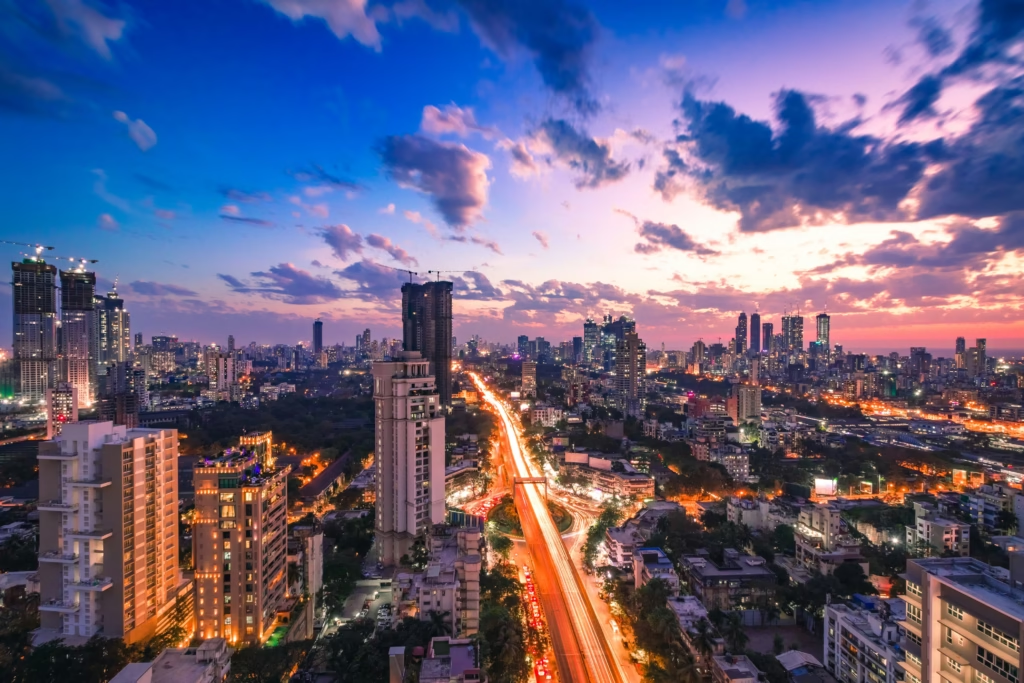
Mumbai Night Skyline

Borivali vs Kandivali — Which Has Better Appreciation?

Borivali vs Kandivali — Which Has Better Property Rate Appreciation? Table of Contents When comparing Borivali vs Kandivali for property investment, most buyers ask one question: Which area gives better appreciation? The honest answer is simple:It depends more on entry price, micro-location, and holding period than on the suburb name. Borivali offers stability and capital safety.Kandivali offers higher upside in selected pockets. This guide explains the difference clearly—without hype. Borivali vs Kandivali Comparison Borivali provides steady, low-risk appreciation, while Kandivali offers higher growth potential in select locations over long-term holding periods. Summary: Borivali → Stable, safer returns Kandivali → Better upside, higher variation Best results → Right price + right location + patience Why Most Buyers Misjudge Property Appreciation in Mumbai Many buyers focus only on today’s price. Experienced investors think about: What this price can become in 7–10 years How demand will evolve Whether the area will upgrade In Mumbai, appreciation is: Slow Uneven Location-sensitive Understanding this prevents costly mistakes. Also Read: City vs Suburb: Where to invest? Borivali Real Estate Investment Guide: Stability and Long-Term Value Borivali is one of the most established residential suburbs on Mumbai’s western line. It benefits from: Strong railway and metro connectivity Well-developed social infrastructure Proximity to green spaces Large family-oriented population Most buyers here plan to live long-term. This makes Borivali a “settlement market,” not a speculative one. How Property Prices Appreciate in Borivali Borivali grows through consistency. Main drivers: Continuous end-user demand Limited land availability Regular redevelopment projects Strong livability index As a result, prices rise steadily over time. There are few sharp spikes, but very few major crashes. Limitations of Borivali for High Capital Appreciation Because Borivali is mature: Prices are already stabilized Major infrastructure is complete Growth is mostly incremental High entry cost reduces returns If you expect rapid doubling of value, Borivali may feel slow. It is designed for safety, not aggressive growth. Kandivali Real Estate Investment Guide: Growth and Emerging Opportunities Kandivali lies between Malad and Borivali and has transformed rapidly over the last decade. It offers: New residential projects Growing commercial zones Expanding metro connectivity Better price-to-space ratio Many buyers choose Kandivali for better entry value. Also Read: Western Express Highway vs Eastern Express Highway Why Kandivali Has Higher Property Appreciation Potential Kandivali is still in a transition phase. It is moving from “developing” to “established.” This creates opportunity because: Base prices are lower Neighborhoods are upgrading Infrastructure is improving Younger buyers are moving in Historically, such areas deliver stronger long-term appreciation. Risks of Investing in Kandivali Property Higher potential comes with higher risk. In Kandivali: Performance varies street to street Project quality differs widely Some pockets stagnate Wrong selection limits returns Without research, upside can disappear. Kandivali rewards preparation, not guesswork. Borivali vs Kandivali Property Appreciation Comparison Table Borivali offers low-risk steady growth. Kandivali offers higher upside in select locations. Factor Borivali Kandivali Demand Stability High Medium–High Price Volatility Low Medium Entry Cost Higher Lower Growth Potential Moderate Higher (Selective) Risk Level Low Medium How Entry Price Affects Real Estate Returns Appreciation depends heavily on buying price. Example: Buying Borivali at peak rates = lower returns Buying Kandivali at fair value = higher returns Even if both reach similar prices later, percentage gain differs. Key Rule:Buying right matters more than buying “prime.” Rental Yield and Its Impact on Long-Term Appreciation Borivali offers stable family rentals. Kandivali offers improving mixed-tenant rentals. Borivali rentals: Predictable Limited growth Kandivali rentals: Faster improvement in growing pockets Higher future potential Better rental performance supports resale value. Also Read: Rental Yield in Mumbai Who Should Invest in Borivali for Property Appreciation Borivali suits you if: You want low risk You prefer capital protection You may live there later You value stability Best for conservative investors and end-users. Who Should Invest in Kandivali for Property Appreciation Kandivali suits you if: You get a good entry deal You have 8–12 years horizon You research locations You accept some variation Best for growth-oriented buyers. Importance of Micro-Location in Borivali and Kandivali Micro-location decides success. Always evaluate: Distance to metro or station Road connectivity Quality of surrounding buildings Access to schools and markets Future development plans A strong Kandivali pocket can outperform a weak Borivali lane. Suburb name is secondary. Location is primary. Practical Investment Tips for Better Appreciation Focus on entry price Study neighborhood growth Avoid hype-driven launches Check builder credibility Think long-term Remember:Steady areas protect money. Transitioning areas grow money. Final Verdict: Borivali vs Kandivali — Which Is Better for Appreciation? There is no universal winner. Borivali gives: Security Consistency Long-term confidence Kandivali gives: Opportunity Flexibility Higher growth potential The right choice depends on your risk profile and goals. The real mistake is buying without clarity. FAQs 1. Which area has better appreciation: Borivali or Kandivali? Borivali offers steady growth. Kandivali can outperform in selected pockets over time. 2. Is Borivali safer than Kandivali for long-term investment? Yes. Borivali has stronger end-user demand and lower downside risk. 3. Can Kandivali give higher returns than Borivali? Yes, in the right locations with long-term holding. 4. Does lower entry price in Kandivali improve returns? Yes. Lower entry prices usually lead to better percentage appreciation. 5. Which area is better for rental-based appreciation? Kandivali in developing pockets. Borivali for stable family rentals. 6. Is Borivali fully developed for price growth? Mostly. Growth is gradual and predictable. 7. Are redevelopment projects better in Borivali or Kandivali? Borivali often benefits more due to prime old locations. 8. Which suburb is better for first-time investors? Usually Kandivali due to lower entry and more options. 9. How important is micro-location? Extremely important. It matters more than suburb name. 10. What is the biggest mistake buyers make? Buying based on reputation instead of real value. Good appreciation depends on: Right price Right location Right timeline Borivali offers steady growth. Kandivali can outperform in selected pockets over time. Yes. Borivali has stronger end-user demand and lower downside risk. Yes, in the right locations with long-term holding. Yes. Lower entry prices usually

Borivali vs Kandivali — Which Has Better Appreciation? Read More »
tier 1 city vs tier 2 city

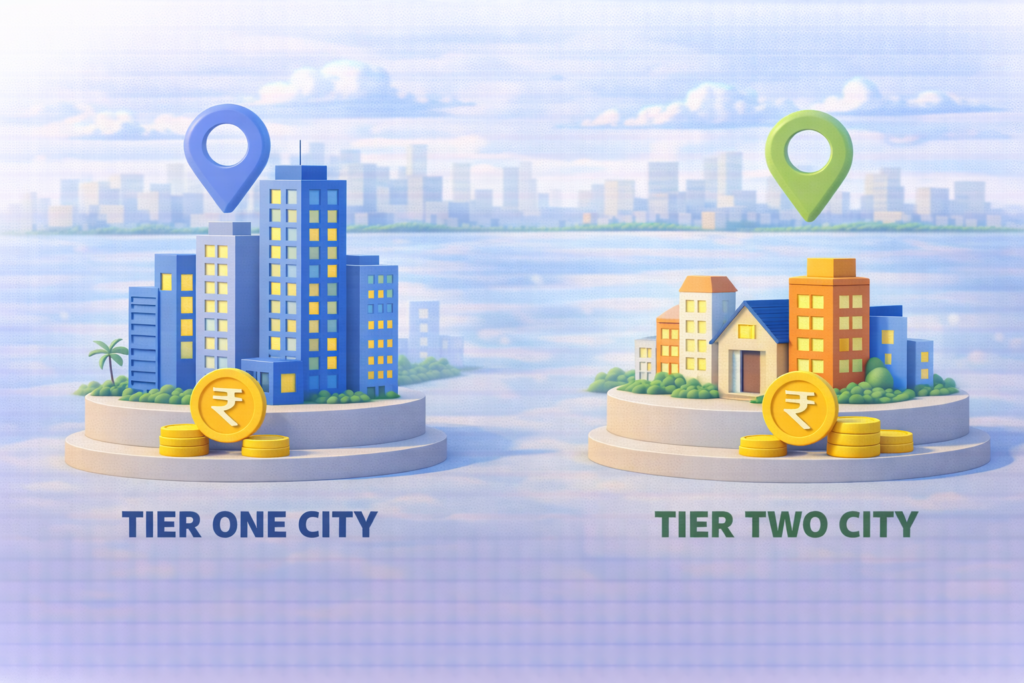
Tier I vs Tier II Cities: Where Should You Invest?

Tier I vs Tier II Cities: Where Should You Invest? Table of Contents Tier 1 city vs Tier 2 city is no longer just a budget question it’s a timing and temperament question.A tier 1 city offers stability, liquidity, and predictable demand but limited upside.A tier 2 city offers affordability and growth potential, but requires patience and location discipline. What to remember:Tier I cities protect wealth. Tier II cities can grow wealth—if you enter early and hold long enough. If you’re confused between Tier I and Tier II cities, you’re thinking correctly. A decade ago, this choice was obvious. Today, it isn’t.Work patterns have changed. Infrastructure has spread outward. Aspirations have shifted. And yet, the risks haven’t disappeared—they’ve only changed shape. So instead of asking “Which is better?”, let’s ask the smarter question: Which one fits your money, timeline, and mental comfort? What Do Tier I and Tier II Cities Actually Mean? In India, the difference between a tier 1 city and a tier 2 city is not about prestige—it’s about economic maturity. A tier 1 city typically has: Large, diversified job markets International connectivity Mature real estate prices High demand but limited new land A tier 2 city usually has: Emerging industries and education hubs Lower property prices Infrastructure catching up A growing aspirational population This difference defines how property behaves over time. Also Read: Mumbai Property Rates Why Tier I Cities Still Feel “Safe” There’s a reason most people instinctively trust a tier 1 city. You’re buying into: Established demand Strong rental markets Easier resale Even during slowdowns, Tier I markets don’t freeze completely. Transactions slow—but they don’t vanish. Why this matters When you’re investing a large amount, emotional stability matters. Tier I cities reduce the risk of regret, even if they don’t deliver excitement. The Reality Check on Tier I City Investments Here’s the part buyers realise later: Entry prices are already stretched Rental yields are modest Appreciation is gradual, not dramatic In many Tier I locations, future growth is already built into today’s price. You’re buying maturity, not momentum. Also Read: Renting vs Buying in Mumbai  Why Tier II Cities Are Attracting Attention A tier 2 city feels like an opportunity. Lower prices mean: Easier entry Bigger homes Less EMI pressure Add improving airports, highways, universities, and IT parks—and the story sounds compelling. And sometimes, it is. The Risk That Comes with Tier II Cities The biggest risk isn’t price fall.It’s overestimating speed. Development in Tier II cities happens unevenly: One pocket grows fast Another stagnates for years Rental markets take time. Resale liquidity is thinner. Exit options are fewer. This is where many investors lose patience—and confidence. Tier 1 City vs Tier 2 City: Rental Reality Rental demand is stronger and more consistent in Tier I cities, while Tier II cities often need years before rentals stabilise. If rental income matters from day one, Tier I cities are usually more dependable.Tier II rentals improve only after job ecosystems deepen. Who Should Invest in a Tier I City? A tier 1 city suits buyers who: Want predictable rentals May exit within 5–7 years Prefer liquidity over upside Are investing a large share of net worth This is often right for: Conservative investors First-time buyers with tight timelines People nearing retirement Who Should Invest in a Tier II City? A tier 2 city works for those who: Have a long holding horizon Don’t rely on immediate rental income Are comfortable with slower exits Want capital appreciation over time Typically suitable for: Younger investors End-users planning future relocation Investors with surplus capital Also Read: Rental Yield in Mumbai The Middle Ground Most People Ignore Not all Tier II cities are equal—and not all Tier I locations are expensive. Smart investing lies in: Tier II cities with strong education or industrial bases Micro-markets already seeing real demand Locations where people are already buying to live, not speculate Labels matter less than ground reality. Practical Takeaways If liquidity matters, Tier I cities are safer If budget matters, Tier II cities offer relief Never invest in a Tier II city based only on future promises Always assess job growth, not just infrastructure plans Rule of thumb: If you can’t wait, don’t go Tier II. If you can wait calmly, Tier II can reward you. Conclusion The tier 1 city vs tier 2 city decision isn’t about choosing the “smarter” option.It’s about choosing the appropriate one. Tier I cities give certainty. Tier II cities offer possibility.Neither is wrong—only mismatched expectations are. If this clarity helps you feel steady rather than rushed, you’re already making a better investment decision. FAQs Is investing in a Tier I city always safer? Generally, yes—but safety comes at a cost.Tier I cities offer stable demand and easier exits, but price appreciation is slower. Safety here means fewer surprises, not higher returns. Can Tier II cities outperform Tier I cities in returns? Yes, over long periods.A well-chosen tier 2 city can outperform if job growth and infrastructure actually materialise. The key word is well-chosen. Which is better for rental income? Tier I cities usually provide more reliable rental income than Tier II cities. Tier II rental markets improve gradually and depend heavily on employment growth. Are Tier II cities risky for first-time buyers? They can be—if expectations are short-term.Tier II cities work better for first-time buyers planning long-term self-use rather than quick resale or rental income. How do I evaluate a Tier II city before investing? Focus on: Job creation, not just infrastructure Presence of universities, hospitals, industries Actual population movement, not projections If people are moving in to live, not just invest, that’s a good sign. Generally, yes—but safety comes at a cost.Tier I cities offer stable demand and easier exits, but price appreciation is slower. Safety here means fewer surprises, not higher returns. Yes, over long periods.A well-chosen tier 2 city can outperform if job growth and infrastructure actually materialise. The key word is well-chosen. Tier I cities usually provide more reliable rental income than

Tier I vs Tier II Cities: Where Should You Invest? Read More »

mumbai east or west

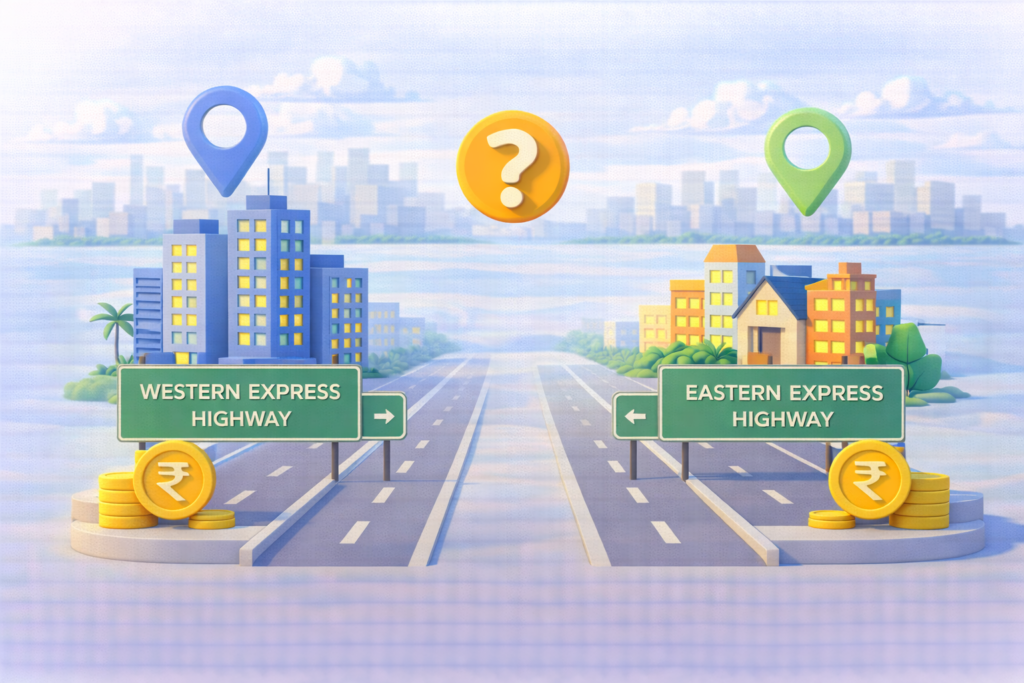
Western Express Highway vs Eastern Express Highway — Which Side of Mumbai Is Better to Live On?

Which Side of Mumbai Is Better to Live On? WEH Vs EEH Table of Contents The choice between Western Express Highway and Eastern Express Highway shapes daily life more than most buyers realise.If you are deciding Mumbai east or west, the western side generally offers a better lifestyle, higher resale demand, and stronger rental markets.The eastern side offers better affordability, shorter commutes to central business districts, and improving infrastructure. What you should remember:The West gives comfort and liquidity. East gives value and practicality. The right side depends on how you live and work. If you’re confused between Mumbai’s East and West, you’re not alone. Also Read: Western Suburbs vs Eastern Suburbs Almost every serious buyer in the city reaches this point.Friends say “West is better.”Brokers say “East is developing fast.”Budgets say “Be practical.” Somewhere in between, you’re trying to figure out what actually works for you. Let’s step away from opinions and look at this like someone who has travelled these roads, lived in these areas, and dealt with traffic, rentals, and resale realities. Understanding What “East” and “West” Really Mean in Mumbai In Mumbai, the railway line is the real divider. On one side is the Western corridor, supported by the Western Express Highway.On the other side is the Central corridor, supported by the Eastern Express Highway. These highways influence: Connectivity Property pricing Office access Lifestyle patterns When people ask about mumbai east or west, they are really asking which ecosystem suits them better. Living on the Western Express Highway Side of Mumbai The western side of Mumbai has traditionally been more popular with home buyers. It includes well-known residential belts and strong social infrastructure. When you live closer to the Western Express Highway, you usually benefit from: Better access to business districts and airports More developed residential neighbourhoods Strong retail, schools, and hospitals Higher rental demand This side has evolved over decades as a preferred residential zone. Also Read: Renting vs Buying in Mumbai Why this matters Areas that people have trusted for years tend to hold value better and attract tenants faster. Advantages of Living on the Western Side of Mumbai If you choose the western corridor, you usually get: Easier access to corporate hubs Better lifestyle amenities Higher resale liquidity Strong professional tenant base This is why many people automatically lean towards the west when buying. A home here feels “safe” in both emotional and financial terms. Limitations of the Western Side of Mumbai The downside is cost. Western-side properties are expensive.Entry prices are high.Space is limited. Traffic congestion is also intense in many pockets, especially near commercial zones. You often pay more for location than for actual living comfort. In simple terms: you buy convenience, not spaciousness. Living on the Eastern Express Highway Side of Mumbai The eastern corridor has changed dramatically in the last decade. Earlier seen as industrial or secondary, it is now home to many large residential projects and improving infrastructure. Living near the Eastern Express Highway gives you: Better access to central Mumbai Faster routes to business districts like BKC and Lower Parel More affordable housing options Newer townships and societies For many practical buyers, this side makes financial sense. Also Read: Packers and Movers Charges  Advantages of Living on the Eastern Side of Mumbai The biggest strength of the east is value. You generally get: Larger homes for the same budget Newer buildings Better amenities in many projects Less pressure on pricing For middle-income families and first-time buyers, this can be a major advantage. Why this mattersLower financial stress improves quality of life more than many people realise. Limitations of the Eastern Side The east still faces perception issues. Some pockets are crowded.Social infrastructure is uneven.Rental demand is improving but not uniform. In certain areas, markets, schools, and hospitals are still developing. Location selection becomes very important here. Mumbai City vs Mumbai Suburban: How This Fits In When people compare mumbai city vs mumbai suburban, they are often mixing two things: work location and residence. Mumbai city areas are closer to historic business zones, while suburban areas offer more residential options. Both highways serve suburban Mumbai more than the core city. Most buyers today live in suburbs and commute. So the real question is:Which suburban side makes your daily life easier? Commute and Work Location Impact This is where many decisions should start. Your work location should strongly influence whether you choose the eastern or western corridor. If you work in: Western suburbs, media, IT, airport zones → West suits better BKC, Lower Parel, Central Mumbai → East often works better Choosing the wrong side can add years of commuting stress. Price Comparison: East vs West Properties on the western corridor are generally more expensive than those on the eastern corridor. Broadly: West = higher price, higher demand East = better value, improving demand This gap exists because of historical development patterns. It is narrowing, but slowly. Rental and Resale Performance Rental and resale matter even if you plan to live in the house. Western side: Faster rentals Higher tenant demand Quicker resale Eastern side: Improving rentals Slower resale in some pockets More dependent on micro-location If flexibility matters to you, the west feels safer. Who Should Prefer the Western Mumbai Living near the Western Express Highway suits you if: You value lifestyle and convenience You may rent out in future You want easier resale Budget is comfortable This suits professionals, investors, and buyers with higher purchasing power. Who Should Prefer the Eastern Mumbai Living near the Eastern Express Highway suits you if: You want better value You prefer larger homes You work in central Mumbai You want lower EMIs This suits first-time buyers, families, and long-term end-users. The Importance of Micro-Location This cannot be stressed enough. In both corridors: One station makes a big difference One road changes livability One bad junction increases stress A good eastern pocket can outperform a weak western one. Always judge the exact location, not just “East” or “West”. Practical Takeaways Choose based

Western Express Highway vs Eastern Express Highway — Which Side of Mumbai Is Better to Live On? Read More »

Seraphinite AcceleratorOptimized by Seraphinite Accelerator
Turns on site high speed to be attractive for people and search engines.