Buy vs Lease Office Space: What’s the Better Choice?
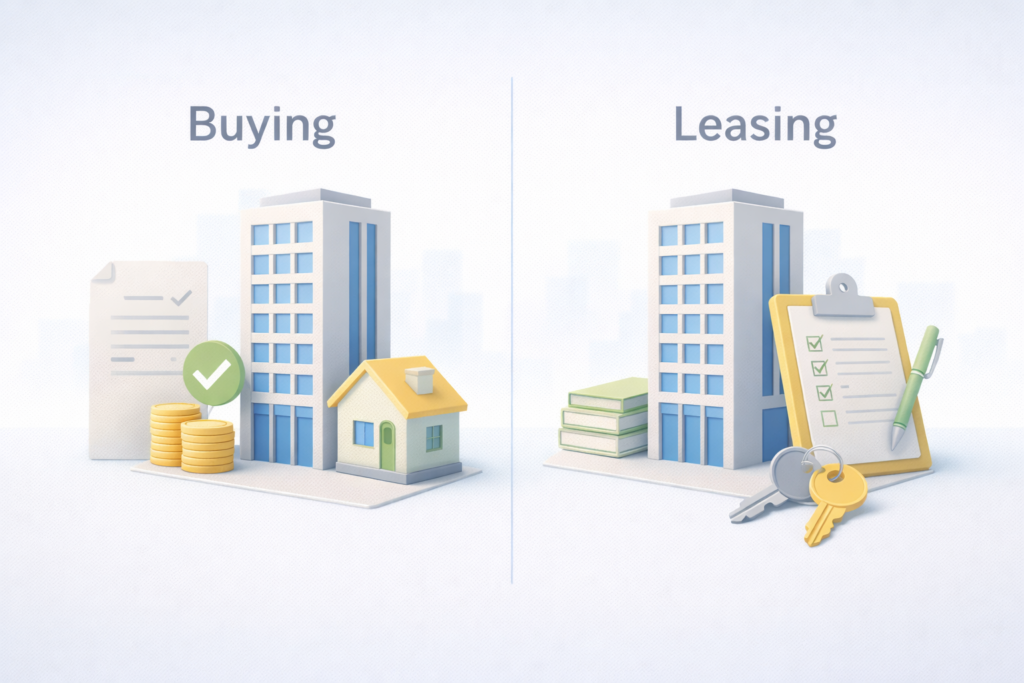
Menu Home Projects About Blogs Contact Us Buy vs Lease Office Space: What’s the Better Choice? Table of Contents Summary: Buying office space is ideal for long-term stability and asset creation, while leasing office space is better for flexibility and lower upfront cost. Buy if your business is stable and long-term Lease if your business is growing or uncertain The right choice depends on your cash flow, growth plans, and risk appetite. The Real Question Behind “Buy vs Lease Office Space” At some point, every business owner faces this decision: “Should I buy an office or continue on rent?” On paper, it sounds simple. Buying builds an asset.Leasing gives flexibility. But in reality, this decision affects: Your working capital Your ability to scale Your financial risk Your long-term stability I’ve seen businesses struggle because they locked too much money into property too early.I’ve also seen companies regret not buying when prices doubled. So this is not just a real estate decision. It’s a business strategy decision. Understanding Buy vs Lease Office Space Before comparing, it’s important to clearly understand what each option actually means. Buying Office Space Buying office space means purchasing a commercial property that your business owns and operates from. This typically involves: Large upfront capital or loan Long-term financial commitment Ownership of a physical asset Once purchased, the office becomes: A business asset A fixed operational base A potential investment for appreciation Leasing Office Space Leasing office space means renting a commercial property under a fixed-term agreement. This involves: Monthly rent Security deposit Lease agreement conditions You don’t own the property, but you gain flexibility and lower financial pressure. Buy vs Lease Office Space — Key Differences Buying office space provides ownership and long-term value, while leasing offers flexibility and lower upfront financial burden. Here’s a clear comparison: Factor Buying Office Space Leasing Office Space Ownership You own the asset No ownership Upfront Cost Very high Low Flexibility Low High Monthly Cost EMI Rent Long-Term Benefit Asset appreciation No asset Risk Type Financial lock-in Rental dependency Buying Office Space: Benefits and Limitations Buying office space can be a strong move — but only in the right situation. Benefits of Buying Office Space Buying an office is not just an expense — it’s a long-term investment. 1. Asset Creation and Wealth Building When you buy office space, you build: Equity Asset value Long-term financial security Over time, the property itself can appreciate significantly. 2. Stability and Control Owning your office means: No rent increases No lease renewals Full control over the space This is especially valuable for long-term businesses. 3. Rental Income Opportunity If your office has extra space, you can lease it out and generate income. This helps offset costs. 4. Strong Brand Perception Owning an office signals: Stability Credibility Long-term commitment This can positively impact clients and partners. Limitations of Buying Office Space Despite the advantages, buying comes with serious trade-offs. High Capital Requirement Buying involves: Down payment Stamp duty Registration Interior costs This can significantly impact your business cash flow. Reduced Financial Flexibility Money locked in real estate cannot be used for: Hiring Marketing Expansion This is where many businesses feel restricted. Maintenance Responsibility As an owner, you are responsible for: Repairs Upkeep Building-related costs These expenses add up over time. Leasing Office Space: Benefits and Limitations Leasing is often the preferred choice for growing businesses — and for good reason. Benefits of Leasing Office Space Leasing supports flexibility and operational freedom. 1. Lower Initial Investment Leasing requires: Security deposit Monthly rent This keeps capital free for business growth. 2. Flexibility to Scale As your business grows, leasing allows you to: Upgrade office size Change location Adapt to new needs This flexibility is crucial in dynamic markets. 3. Access to Prime Locations Leasing allows businesses to operate in premium areas without huge investment. 4. Lower Operational Burden In many cases: Maintenance Infrastructure Building management Are handled by the landlord. Limitations of Leasing Office Space Leasing is flexible — but not perfect. No Ownership or Asset Creation Monthly rent does not build equity. Over time, this can feel like a lost opportunity. Rent Increases Over Time At lease renewal: Rent may increase Terms may change This creates uncertainty. Limited Customisation Tenants may face restrictions on: Structural changes Layout modifications Advantages of Buying Office Space For many established businesses, buying office space can offer several long-term benefits. 1. Long-Term Asset Creation When you buy office space, you are building a long-term asset for your company. Commercial properties can appreciate in value, providing wealth creation in addition to business use. Over time, the property may become a valuable financial resource. 2. No Rental Uncertainty Businesses that own their office space do not have to worry about rising rent or lease renewal issues. This provides stability and predictable costs. 3. Potential Rental Income If the office space is larger than required, owners can lease out unused areas to other businesses and generate rental income. 4. Brand and Business Stability Owning an office can strengthen a company’s brand identity. Clients and partners often view owned commercial space as a sign of long-term stability. Disadvantages of Buying Office Space While buying office space has advantages, it also comes with several challenges. High Upfront Investment Purchasing commercial property requires a large capital investment. Down payments, stamp duty, registration costs, and interior setup can significantly increase the overall cost. Reduced Financial Flexibility Capital tied up in real estate may reduce funds available for business expansion, hiring, or operations. Maintenance Responsibilities Property owners must handle maintenance, repairs, and building management costs, which can add to long-term expenses. Advantages of Leasing Office Space Leasing is a popular option for startups and growing businesses because it offers flexibility and lower financial commitment. 1. Lower Initial Investment Leasing requires significantly lower upfront costs compared to purchasing property. Businesses typically pay a security deposit and monthly rent instead of investing large capital. 2. Greater Flexibility Companies can relocate easily when business needs change. This flexibility is particularly
Buy vs Lease Office Space: What’s the Better Choice? Read More »