...

Residential Property

Invest in Commercial Property in India

Home Buying Anxiety? Read This Before Buying a Flat in India (2026 Guide)

Menu Home Projects About Blogs Contact Us Home Buying Anxiety? A Complete Guide to Buying a Flat in India Without Regret Table of Contents Summary: Buying a flat in India is not just a financial decision it is an emotional one filled with fear, pressure, and confusion.Most buyers struggle with questions around affordability, timing, legal safety, and whether they’re making a mistake. This guide breaks down the real concerns buyers face and gives practical clarity at every step. What you should remember:You don’t need a perfect decision. You need a well-informed, emotionally calm decision. If You’re Feeling Confused, You’re Not Alone If you’re planning to buy a flat, your mind is probably going in circles: “Am I buying too early?” “What if prices fall after I buy?” “What if I pick the wrong location?” “What if I get stuck with a bad builder?” And then there’s pressure: Family expectations Friends already buying homes Brokers pushing “last few units left” This isn’t just a purchase decision.It feels like a life decision you can’t afford to get wrong. So instead of rushing into answers, let’s break this down properly. Are You Actually Ready to Buy a Flat? You are ready to buy a flat when your finances are stable, your EMI is manageable, and your decision is not driven by pressure or fear.   Financial Readiness (This Is Where Most People Go Wrong) Before you even start looking at properties, ask yourself: Can I comfortably pay the EMI for the next 15–20 years? Do I have at least 6–12 months of savings? Am I accounting for all costs—not just property price? Most buyers underestimate costs like: Stamp duty & registration Interiors & furnishing Maintenance charges Parking costs Reality check:If your EMI is stretching your lifestyle, you’re not buying a home—you’re buying stress. Emotional Readiness (No One Talks About This) This is where things get real. Many people buy homes because: “Everyone else is buying” “Family is pressuring” “Rent feels like waste” But here’s the truth: Buying under pressure often leads to regret. Ask yourself honestly: Am I buying for stability or validation? Will I still be okay with this decision after 5 years? Is This the Right Time to Buy Property? There is no perfect time to buy property. The right time is when your financial situation and personal needs are aligned. You will always hear two extreme opinions: “Prices will go up—buy now!” “Market will crash—wait!” Both are guesses. What actually matters: Do you need a home now? Can you afford it comfortably? Is your job/income stable? Important mindset shift:Waiting for the “perfect time” often leads to no decision at all. How Much Budget Should You Actually Set? A safe home-buying budget ensures your EMI stays within 30–40% of your monthly income while leaving room for savings and lifestyle expenses. A common mistake: People buy the maximum loan they are eligible for. That’s dangerous. Instead: Keep EMI comfortable Maintain lifestyle flexibility Plan for future expenses (kids, business, emergencies) Simple rule:If one bad year can break your finances → you’ve overbought. Location vs Price: What Should You Prioritise? A slightly more expensive home in a well-connected location usually performs better than a cheaper home in a poorly connected area. This is one of the biggest dilemmas: Bigger house far awayvs Smaller house in a better location Most buyers regret going too far just to save money. Because later: Commute becomes painful Rental demand is weak Resale becomes difficult Ask yourself: “Would I actually enjoy living here daily?” That answer matters more than price. How to Avoid Pressure, Hype & FOMO Do not make property decisions under urgency or pressure. Most “limited offers” are marketing tactics, not real scarcity. Common pressure tactics: “Last 2 units left” “Price increasing tomorrow” “Everyone is booking fast” Reality: – Good properties don’t disappear overnight.– Bad decisions stay for years. Take your time. Always. Step-by-Step: How to Actually Buy a Flat Safely Buying property involves four key steps: shortlisting, price evaluation, legal verification, and final transaction. 1. Shortlisting Properties Focus on: Budget Location Builder credibility Avoid looking at 20 options.That creates confusion. 2. Price Evaluation Do NOT trust brochure pricing. Instead: Check nearby resale rates Compare per sq ft pricing Talk to multiple brokers The real price is what people actually pay—not what builders quote. 3. Legal Verification (Non-Negotiable) Always verify: Title clarity RERA registration Approvals & permissions Occupancy certificate (If possession is done) If needed, consult a lawyer/banker. Skipping this step can cost you, your hard earned money and in some cases even your property. 4. Final Decision & Closure Before paying: Revisit the property Check surroundings at different times Recalculate affordability Only then proceed. Emotional Mistakes Buyers Commonly Make The biggest home-buying mistakes are driven by emotion—FOMO, pressure, and fear of missing out. Common emotional mistakes: Buying just because friends bought Overstretching finances for “status” Ignoring commute reality Trusting marketing blindly Important truth:Most bad property decisions are emotional, not logical. How to Stay Calm During the Buying Process Buying a home can feel overwhelming. Here’s what helps: Take breaks from property search Talk to someone who has already bought Write down your priorities clearly Use checklists instead of relying on memory Clarity reduces anxiety. Practical Tools That Make This Easier Instead of guessing, use tools: EMI calculator → understand affordability Rent vs buy calculator → compare decisions Legal checklist → avoid missing documents Property comparison sheet → stay organised These reduce confusion and bring structure. Final Thoughts: You Don’t Need a Perfect Decision Buying a home will never feel 100% comfortable. There will always be: Some doubt Some risk Some uncertainty That’s normal. What matters is this: You understand what you’re doing You’re not under pressure You can afford the decision If those three are clear, you’re already ahead of most buyers. FAQs Is buying a flat stressful? Yes, for most people. It involves large money, long-term commitment, and uncertainty. Proper planning reduces stress significantly. How do I know if I can afford a flat?

Home Buying Anxiety? Read This Before Buying a Flat in India (2026 Guide) Read More »

Commercial vs Residential Property

Commercial vs Residential Property Investment: Which Makes More Money?

Menu Home Projects About Blogs Contact Us Commercial vs Residential Property: Which Makes More Money? Table of Contents Summary: Commercial vs residential property investment is a common question for investors trying to choose between steady stability and higher income potential. Commercial property such as offices, shops, or warehouses usually offers higher rental yields, often between 6–9%. Residential property typically offers lower rental yields, often around 2–3%, but it usually has more consistent demand and lower vacancy risk. What you should remember:Commercial property may make more money in rent, but residential property is usually easier to manage and less risky. Almost every real estate investor eventually reaches this question: “Should I buy a shop or another flat?” On paper, commercial property looks very attractive. The rental income seems higher and lease agreements are longer. But once you talk to actual property owners, you hear another side of the story: vacancies, tenant turnover, and loan pressure. So instead of looking only at rental yield, it helps to step back and understand how commercial vs residential property investment really works in practice. Difference Between Commercial and Residential Property Let’s start with the basics.Commercial property refers to real estate used for business activities such as offices, shops, and warehouses, while residential property is used for housing purposes. Residential properties include: Apartments Independent houses Residential plots Commercial properties include: Retail shops Office spaces Warehouses Commercial units in business complexes Because these properties serve different purposes, the way they generate income is also different. Rental Income: Where Commercial Property Usually Wins The biggest attraction of commercial property is rental yield.Commercial property typically offers higher rental yields than residential property, often between 6–9% compared to 2–3% for residential property. This happens because businesses often pay higher rents for strategic locations. For example: A retail shop in a busy market may generate strong monthly income. A residential flat in the same area may generate significantly lower rent relative to its price. For investors focused on cash flow, commercial properties can look appealing. Stability of Income: Where Residential Property Has an Advantage Income stability tells a different story in each type of property. Residential demand is consistent because people always need places to live. Commercial demand depends on business conditions. Residential properties usually have lower vacancy risk because housing demand is constant, while commercial properties may remain vacant longer if businesses are not expanding. A residential flat may find a new tenant within a few weeks or months. An office or shop may remain vacant for longer if demand slows down. Entry Cost and Financing Differences Another key difference is the initial cost of investment While purchasing, commercial properties generally require: Larger down payments Higher loan interest rates Shorter loan tenures Residential loans are usually easier to obtain and often have lower interest rates. This makes residential property more accessible for first-time investors. Lease Terms and Tenant Agreements Commercial lease agreements tend to be longer. Typical commercial leases may include: Lock-in periods of 3–5 years Rent escalation clauses Security deposits Residential leases are usually shorter, often 11 months with renewal. Longer leases in commercial property can provide predictable income, but only if the tenant remains stable. Risk Factors in Both Investments Both property types carry different types of risk. Commercial property risks: Longer vacancy periods Dependence on business activity Higher financial exposure Residential property risks: Lower rental yield Frequent tenant changes Maintenance responsibilities Understanding these risks is important before making an investment decision. Appreciation Potential Property value growth also differs between the two segments. Commercial properties may appreciate significantly if located in a strong business district. Residential properties often appreciate steadily as population and housing demand grow. However, appreciation depends heavily on: Location Infrastructure development Demand in the local market So neither category guarantees higher capital growth automatically. Which Investment Is Better for Beginners? For many first-time investors, residential property is easier to manage. Reasons include: Lower entry cost Easier financing More predictable tenant demand Commercial property may suit investors who: Already own residential assets Have stronger financial buffers Are comfortable managing business tenants Practical Takeaways When comparing commercial vs residential property investment, keep these points in mind: Commercial property often offers higher rental income Residential property usually has lower vacancy risk Commercial loans and entry costs are higher Location plays a decisive role in both cases Cash flow planning is essential for commercial assets If you remember only one thing:Higher yield usually comes with higher risk. Conclusion Choosing between commercial vs residential property investment is not simply about which makes more money. Commercial properties can produce stronger rental income, but they also demand higher capital, greater financial discipline, and the ability to handle vacancies. Residential properties, on the other hand, may produce lower yields but tend to offer steadier demand and simpler management. The right choice depends on your financial position, risk tolerance, and investment goals. For many investors, a balanced portfolio—including both types over time—often proves to be the most practical approach. FAQs: Commercial vs Residential Property Investment Which is more profitable: commercial or residential property? Commercial property generally offers higher rental yields, but also carries higher vacancy risk. Residential property tends to have steadier demand because people always need housing. Is commercial property riskier than residential property? Yes, commercial property investment usually carries higher risk because vacancy periods can be longer and rental demand depends on business activity. Residential properties typically have more consistent demand. Which property type is easier for first-time investors? Residential property is often easier for beginners because financing is simpler and tenant demand is steady. Commercial property usually requires higher capital and stronger financial planning. Can commercial property give long-term appreciation? Yes, commercial properties located in strong business districts can appreciate significantly over time. However, appreciation depends heavily on location, infrastructure, and economic activity. Should investors choose only one type of property? Not necessarily. Many experienced investors diversify their portfolios by holding both residential and commercial properties. This allows them to balance steady demand with higher rental income opportunities. Commercial property

Commercial vs Residential Property Investment: Which Makes More Money? Read More »

Real Estate in Navi Mumbai

Real Estate in Navi Mumbai: A Comprehensive Guide

Menu Home Projects About Blogs Contact Us Real Estate in Navi Mumbai: A Comprehensive Guide Table of Contents Real Estate in Navi Mumbai Is Real Estate in Navi Mumbai worth considering in 2026?Yes, especially for buyers seeking better planning, wider roads, larger homes, and long-term livability near Mumbai. What makes Navi Mumbai attractive?Organised urban design, relatively affordable entry prices, improving infrastructure, and stable rental demand in key nodes. What’s the risk?Choosing the wrong sector or buying too far from railway connectivity. Bottom line:Navi Mumbai rewards patience and strong location selection. Connectivity determines both comfort and value. (Before we go deeper, pause for a moment.) If you’re evaluating Real Estate in Navi Mumbai, you’re probably thinking: “I’ll get more space for my money.”“But will I feel too far from Mumbai?” Both thoughts are valid. On maps and brochures, Navi Mumbai looks perfect.In real life, some nodes feel complete and comfortable. Others still feel transitional. Let’s look at Navi Mumbai the way buyers experience it after site visits, traffic checks, and EMI calculations — not just marketing presentations. Also Read: Mumbai Property Rates How Is Real Estate in Navi Mumbai Different from Mumbai Suburbs? Real Estate in Navi Mumbai behaves differently because the city was planned from the start. It was designed with: Wide internal roads Separate residential and commercial zones Green belts Industrial areas away from homes Because of this, Navi Mumbai feels: More structured Less chaotic More self-contained That planning advantage is real — and noticeable in daily life. Why Buyers Are Drawn to Navi Mumbai Better Urban Planning Compared to many Mumbai suburbs, Navi Mumbai feels calmer. You get: Wider roads Better drainage More open spaces Fewer irregular constructions Daily movement feels more manageable. Also Read: Documents Required for Home Loan More Space for the Same Budget For the cost of a compact Mumbai apartment, you can often buy a larger home here. This matters if: You’re upgrading You have a growing family You want practical, usable layouts Space affects lifestyle more than brand names do. Strong Education & Healthcare Ecosystem Over time, Navi Mumbai has developed: Reputed schools Colleges Multi-speciality hospitals This makes Real Estate in Navi Mumbai attractive for long-term family living, not just affordability. Major Residential Nodes in Navi Mumbai (And How They Differ) Navi Mumbai is not one market. It is a collection of nodes, each with its own character. Vashi & Nerul Oldest, most established nodes.Strong railway connectivity.Stable resale and rental demand.Higher pricing due to maturity. Seawoods & CBD Belapur Commercial hubs.Better infrastructure.Premium residential projects.Popular among professionals. Kharghar Fast-growing residential zone.Larger homes.Green surroundings.Strong for long-term family living. Panvel & Peripheral Areas Lower entry prices.Long-term infrastructure expectations.Requires patience and holding capacity. Choosing the right node matters more than choosing Navi Mumbai itself. How Do Property Prices in Navi Mumbai Compare to Mumbai? Property prices in Navi Mumbai are generally lower than central and western Mumbai while offering larger homes and better planning. Broadly: Vashi, Nerul, Seawoods → Premium Kharghar, Belapur → Mid-range Panvel & outskirts → Affordable But price alone misleads. A cheaper flat far from transport can reduce quality of life and weaken resale. Connectivity: The Backbone of Real Estate in Navi Mumbai In the Mumbai region, property value follows transport. Navi Mumbai benefits from: Harbour railway line Sion–Panvel Highway Mumbai–Pune Expressway Upcoming metro links Navi Mumbai International Airport (under development) Why this matters Connectivity directly impacts: Rental performance Resale liquidity Daily convenience Appreciation stability If you’re evaluating Real Estate in Navi Mumbai, start with: “How practical is my daily commute?” Also Read: Rental Yield in Mumbai Is Navi Mumbai Good for Investment? Navi Mumbai works better for long-term investment than short-term speculation. It offers: Steady appreciation Infrastructure-backed growth Structured expansion It does not offer: Sudden price spikes Easy short-term flips If your timeline is 7–10 years, Navi Mumbai can work well. If your timeline is 2–3 years, expectations need adjustment. Rental Market in Navi Mumbai Navi Mumbai has stable rental demand, strongest in established nodes with transport access. Rental demand is strongest in: Vashi Nerul Seawoods Belapur Driven by: Corporate offices IT presence Families relocating Peripheral zones have weaker rental pull. If rental income supports your EMI, stay near railway connectivity. Cost of Living in Navi Mumbai vs Mumbai Many buyers compare purchase price but ignore lifestyle cost. Expense Category Navi Mumbai Western Mumbai Purchase Price Lower Higher Rent Moderate Higher Maintenance Moderate Higher in premium pockets Commute Cost Higher if working in West Mumbai Lower (if nearby) Daily Living Similar Similar The trade-off:Navi Mumbai saves on housing cost but may increase commute time depending on workplace. Your job location decides whether Navi Mumbai feels economical or exhausting. Who Should Consider Buying in Navi Mumbai? Real Estate in Navi Mumbai suits you if: You value urban planning You prefer wider roads and less congestion You want larger homes You are comfortable with suburban lifestyle Ideal for: Families Professionals working in Navi Mumbai or Central zones Long-term end-users Who Should Be Careful? Navi Mumbai may not suit you if: You work daily in western suburbs You depend heavily on premium rental yield You need quick resale cycles Long commutes frustrate you In such cases, central or western Mumbai may feel more practical. Builder Quality & Project Selection Project quality varies widely. Always check: Legal approvals Occupancy certificate Maintenance quality Resident feedback Completed phase condition In large townships, management quality matters as much as construction. Common Mistakes Buyers Make Buying too far from railway stations Overestimating infrastructure timelines Ignoring rental feasibility Choosing price over connectivity Not testing commute during peak hours These mistakes create long-term regret. Practical Takeaways Prioritise railway access Choose established nodes for stability Visit during peak hours Check actual commute time Focus on daily livability If you remember only one thing: In Navi Mumbai, connectivity decides both comfort and value. That’s usually the best real estate outcome. FAQs Is Real Estate in Navi Mumbai still affordable compared to Mumbai? Yes, in most cases. Real Estate in Navi Mumbai is generally more

Real Estate in Navi Mumbai: A Comprehensive Guide Read More »

Real Estate in South Mumbai

Real Estate in South Mumbai: A Comprehensive Guide

Menu Home Projects About Blogs Contact Us Real Estate in South Mumbai: A Comprehensive Guide Table of Contents Should You Buy Property in South Mumbai? Real Estate in South Mumbai is best suited for buyers who want capital safety, central access, and long-term stability — not fast appreciation or large living space. You are paying for: Scarcity Location Legacy Social positioning Not for: Carpet area Modern township amenities Rapid growth Why Is South Mumbai So Expensive? South Mumbai is expensive because land supply is almost fixed while demand remains constant. Unlike suburbs, South Mumbai cannot expand. Most buildings are old, tightly held, and rarely sold. Add to that: High-net-worth buyers Business families Institutional importance Heritage zones Sea-facing inventory scarcity And prices remain structurally strong. Also Read: Mumbai Property Rates South Mumbai Property Rates — Area-Wise Breakdown (2026) When people search for “South Mumbai property rates area wise”, this is what they want — real clarity. Here’s a broad ground-level snapshot: Area Approx Property Rates (₹ per sq ft) Market Nature Malabar Hill ₹90,000 – ₹1,20,000+ Ultra premium, capital preservation Marine Drive ₹85,000 – ₹1,10,000 Iconic sea-facing, extremely limited supply Worli Sea Face ₹75,000 – ₹1,10,000 Luxury towers, premium demand Cuffe Parade ₹65,000 – ₹95,000 Executive housing, legacy demand Colaba ₹60,000 – ₹95,000 Heritage + premium rental pull Lower Parel ₹50,000 – ₹75,000 Redevelopment-driven modern luxury Byculla (select projects) ₹40,000 – ₹60,000 Emerging luxury, selective upside What This Means in Real Terms A 1,000 sq ft flat in Malabar Hill can cost ₹9–12 crore. A 1,000 sq ft flat in Lower Parel can cost ₹5–7.5 crore. Older buildings may quote lower rates, but renovation cost adds up significantly. In South Mumbai, micro-location matters more than the area name. Also Read: City vs Suburb: Where to invest? Which Is the Most Expensive Area in South Mumbai? Malabar Hill and Marine Drive are typically the most expensive residential zones in South Mumbai due to extreme land scarcity, sea views, and long-standing demand. Are South Mumbai Property Rates Falling? South Mumbai property rates generally show stability with gradual appreciation rather than sharp corrections. Prices may slow during weak markets —but meaningful crashes are rare due to supply constraints. What You Actually Get in South Mumbai Central Location Living here means: Easy access to Nariman Point & Fort Proximity to courts and finance hubs Strong public transport links Faster access to key business districts For business owners and senior professionals, this reduces daily friction. Established Infrastructure You are not buying into a “developing” zone. Everything already exists: Schools Hospitals Markets Cultural institutions Restaurants and retail You move into maturity, not potential. Prestige & Social Capital Address still carries weight in India. A South Mumbai address often signals: Financial strength Stability Legacy positioning For some buyers, that intangible value is part of the return. Cost of Living in South Mumbai — What Buyers Often Underestimate Most buyers calculate purchase price.Very few calculate lifestyle cost. Is South Mumbai Expensive to Live In? Yes. South Mumbai is one of the most expensive residential zones in India in terms of housing cost, maintenance, parking, and lifestyle expenses. Monthly Cost Comparison (2 BHK Lifestyle) Expense South Mumbai Western Suburbs Rent ₹1L – ₹3L+ ₹40k – ₹80k Maintenance ₹15k – ₹40k ₹5k – ₹15k Parking ₹5L–₹25L (one-time buy) Often included School Fees Premium Moderate–High Dining & Lifestyle High Moderate–High What Drives Higher Costs? Lift & structural maintenance in old buildings Heritage repair obligations Premium society staffing Parking scarcity Higher lifestyle ecosystem You don’t just buy property in South Mumbai.You buy into a higher cost environment. Rental Market in South Mumbai South Mumbai has strong rental demand from corporate executives, expats, legal professionals, and business families. Rents are high in absolute terms. But because purchase prices are extremely high, percentage returns are moderate. South Mumbai Rental Yield Breakdown (Area-Wise Reality) Most people hear:“Rent is ₹2 lakh per month.” Very few calculate yield. What Is the Rental Yield in South Mumbai? Rental yield in South Mumbai typically ranges between 1.5% and 3% annually, depending on location and building quality. Because capital values are very high, the yield percentage remains modest. Area-Wise Rental Yield Snapshot Area Avg Price (₹ per sq ft) Typical Monthly Rent (2 BHK) Approx Yield Malabar Hill ₹90k–₹1.2L ₹2L–₹3L 1.5%–2% Marine Drive ₹85k–₹1.1L ₹2L–₹2.5L 1.5%–2% Cuffe Parade ₹65k–₹95k ₹1.5L–₹2.5L 2%–2.5% Colaba ₹60k–₹95k ₹1.5L–₹2.5L 2%–2.5% Lower Parel ₹50k–₹75k ₹1.2L–₹2L 2%–3% Simple Example Purchase Price: ₹8 crore Annual Rent: ₹24 lakh Yield ≈ 3% Compare that to a ₹2 crore western suburb flat with ₹60k rent (≈3.6%). South Mumbai offers high rent in rupees —but moderate rent in percentage. Who Should Buy in South Mumbai? South Mumbai suits: Business owners High-net-worth families Senior executives Buyers prioritising capital protection It does not suit: First-time buyers stretching financially Investors expecting fast appreciation Buyers prioritising large space Old Buildings vs Redevelopment Older Buildings: Larger layouts Lower entry cost (sometimes) Possible redevelopment upside Redeveloped Towers: Modern construction Higher safety Extremely high pricing Legal due diligence is essential here. Always verify: Clear title Occupancy certificate Redevelopment clauses Society documentation Common Mistakes Buyers Make Buying for prestige, not practicality Ignoring maintenance cost Assuming fast appreciation Skipping legal checks Overstretching finances In South Mumbai, documentation mistakes are expensive. Also Read: How To Invest In Real Estate Final Truth About Real Estate in South Mumbai South Mumbai is about permanence. It offers: Stability Capital safety Social credibility Central access It does not offer: Speed Size High yield If you buy calmly, within comfort, it can feel secure. If you stretch emotionally, it can feel heavy. In South Mumbai, wealth preservation matters more than wealth acceleration. FAQs Is Real Estate in South Mumbai only for rich buyers? Practically, yes. Even smaller flats require strong financial backing. This market suits financially stable buyers, not those stretching to enter. Does South Mumbai still give good appreciation? South Mumbai offers slow but steady appreciation driven by limited supply and consistent demand. Prices usually rise gradually over time. You should not expect sharp jumps.

Real Estate in South Mumbai: A Comprehensive Guide Read More »

City vs Suburbs

Andheri vs Goregaon — Where Should You Buy?

Andheri vs Goregaon: Where Should You Buy Table of Contents Choosing between a flat in Andheri and a flat in Goregaon is not about which area is “better”. It’s about how you live, how long you plan to hold the property, and how much uncertainty you can handle.Andheri offers stronger connectivity, rental demand, and easier resale.Goregaon offers more space, better value for money, and improved liveability in many pockets. What you should remember:Andheri gives speed and liquidity. Goregaon gives space and breathing room. The right choice depends on your priorities, not the pin code. If you’re confused between Andheri and Goregaon, you’re not overthinking it. This decision genuinely affects daily life, finances, and future flexibility. On paper, both look similar.On the ground, they feel very different. This isn’t a brochure comparison. This is about traffic at 8:30 am, resale calls that don’t come, rentals that do, and how comfortable you feel five years after buying. Let’s break it down calmly. Andheri Real Estate Guide Andheri has long been one of Mumbai’s most in-demand suburbs. Its biggest advantage is location. Andheri sits between key commercial hubs and has excellent east–west connectivity. Metro lines, the Western Express Highway, Link Road, and proximity to business districts make daily movement easier compared to many other suburbs. When someone looks for a flat in Andheri, they are usually paying for convenience rather than space. People who actively prefer Andheri include working professionals, people in media and corporate roles, and buyers who value short commute times over carpet area. Why a Flat in Andheri Makes Sense A flat in Andheri works well because: Rental demand is consistently strong Resale liquidity is better than most suburbs Connectivity supports both east and west travel Tenants are easier to find across budgets Why this matters is simple. If your plans change, Andheri gives you options. You can rent it out quickly or sell it without waiting endlessly for the “right buyer”. Reality Check: Disadvantages of Buying in Andheri Andheri is not without compromises. Prices are already high and, in many micro-locations, stretched. New projects come at a premium and older buildings often require redevelopment considerations. Traffic congestion is a daily reality, especially during peak hours. In practical terms, you often pay more for a smaller home. A compact flat here can cost the same as a much larger home just a few kilometres north. Andheri rewards you convenience, not comfort. Goregaon Real Estate Guide Goregaon has changed significantly over the last decade. What was once considered “too far” is now a serious residential option. Goregaon benefits from improving infrastructure, metro connectivity, and newer residential developments. Both East and West have pockets that are now well established for families and long-term living. When buyers look for a flat in Goregaon, they are usually looking for space, better layouts, and value. Why Buying a Flat in Goregaon Appeals to Home Buyers A flat in Goregaon typically offers: Larger carpet area for the same budget Newer societies with better amenities Better ventilation and layouts A more residential, less commercial feel Why this matters becomes clear after a few years of living there. Daily comfort, storage space, and usable rooms make a real difference, especially for families. The Limitations of Goregaon Goregaon is not uniform. One side of a road can feel sorted, while another lane feels chaotic. Rental demand exists, but it’s not as aggressive as Andheri. Resale can take longer, especially if the building or location isn’t well chosen. Traffic bottlenecks do exist, particularly near arterial roads and junctions. In Goregaon, micro-location matters more than the area name itself. Andheri vs Goregaon: Price and Value Comparison A flat in Andheri usually costs more per square foot than a flat in Goregaon because of stronger connectivity and rental demand. Broadly speaking: Andheri means higher price, lower space Goregaon means better space, better value However, a well-located Goregaon property can outperform a poorly chosen Andheri one. Average prices never tell the full story. Rental Market Comparison Rental demand is generally stronger and more consistent in Andheri than in Goregaon. Andheri attracts professionals and short-term tenants, making it easier to support EMIs through rent. Goregaon rentals are steadier with families and long-term tenants but may not fetch the same premium. If rental income is important to you, Andheri usually feels safer. Who Should Buy a Flat in Andheri A flat in Andheri makes sense if: You prioritise connectivity and commute You may rent out the property You plan to sell within 5–7 years Liquidity and flexibility matter This suits investors, working professionals, and buyers with shorter timelines. Who Should Buy a Flat in Goregaon A flat in Goregaon works well if: You want more living space You are buying primarily for self-use You plan to stay long term You value comfort over pin code prestige This suits families, end-users, and buyers thinking in decades rather than quick exits. The East vs West Factor Both Andheri and Goregaon behave very differently on their east and west sides. In Andheri, the west offers lifestyle and higher rents, while the east is more office-oriented and relatively affordable. In Goregaon, the west generally feels more residential and premium, while the east needs careful pocket-by-pocket evaluation. Never decide based only on “Andheri” or “Goregaon”. Always decide based on the exact location. Practical Takeaways If rental income and resale matter, Andheri has an edge If space and long-term comfort matter, Goregaon offers better value Always visit the area during peak traffic hours Check building age and redevelopment prospects Micro-location matters more than the suburb name If you remember only one thing, remember this:In Andheri, you pay for speed. In Goregaon, you pay for living comfort. Conclusion The decision between a flat in Andheri and a flat in Goregaon is not about choosing the “better” suburb. It’s about choosing the right fit for your lifestyle, finances, and future plans. Andheri gives you movement, liquidity, and flexibility.Goregaon gives you space, value, and ease of living. Neither choice is wrong. Rushed decisions

Andheri vs Goregaon — Where Should You Buy? Read More »

Real Estate in Western Mumbai

Real Estate in Western Mumbai: A Comprehensive Guide

Menu Home Projects About Blogs Contact Us Real Estate in Western Mumbai: A Comprehensive Guide Table of Contents Real Estate in Western Mumbai remains one of the strongest and most reliable property markets in India.It offers excellent connectivity, strong rental demand, and consistent resale value. However, prices are high, space is limited, and appreciation is usually steady rather than dramatic. What you should remember:Western Mumbai gives liquidity and convenience. It rewards sensible buyers, not speculators. If you’re looking at Western Mumbai, you’re probably balancing comfort with cost. On one side, there’s the appeal of good connectivity, familiar neighbourhoods, and strong demand.On the other, there’s the reality of high prices and small carpet areas. Most buyers don’t choose Western Mumbai casually.They choose it after comparing suburbs, calculating EMIs, and realising that daily convenience matters more than they expected. So let’s talk about this market as it really works—not as a “premium zone”, but as a long-term life and money decision. Understanding Western Mumbai’s Position in the Property Market Western Mumbai stretches from heritage areas near the coast to northern suburban belts. It includes well-known residential and commercial hubs such asBandra, Andheri, and Borivali. Over decades, this belt has developed into Mumbai’s most preferred residential corridor. This is why Real Estate in Western Mumbai is driven by demand first and price second. People want to live here. Prices follow. Also Read: Home Loan Interest Rates Why Buyers Are Drawn to Western Mumbai There are practical reasons behind its popularity. 1. Strong Connectivity Western Mumbai benefits from: Suburban railway line Metro network Link Road and Western Express Highway Airport proximity in many areas Daily commuting is easier compared to many other parts of the city. 2. Mature Social Infrastructure Most western suburbs already have: Reputed schools Established hospitals Shopping areas Offices and studios You don’t wait for development. It’s already there. 3. Consistent Demand Professionals, families, and investors all prefer this belt. This keeps: Rentals active Resale markets liquid Prices relatively stable Major Residential Zones in Western Mumbai Western Mumbai is not one market. It is several micro-markets. Bandra to Santacruz Belt This is a premium lifestyle zone. It offers: Central location High rentals Strong prestige value Prices are among the highest in suburban Mumbai. Andheri Belt One of the most balanced markets. It offers: Excellent connectivity Strong rental demand Wide range of budgets It suits both investors and end-users. Goregaon to Malad Belt This is a value-plus zone. It offers: Better space Newer projects Growing infrastructure It suits families and long-term buyers. Kandivali to Borivali Belt This is more end-user driven. It offers: Relatively better affordability Family-oriented societies Stable neighbourhoods It suits long-term residents. Price Trends and Entry Levels Featured snippet answer:Property prices in Western Mumbai are among the highest in suburban Mumbai due to strong demand and limited land supply. Broadly: Bandra and Juhu areas are premium Andheri is high-mid range Goregaon to Borivali offers better value But averages can mislead. Two buildings on the same road can have very different pricing based on age, amenities, and reputation. Housing Stock: Old Buildings vs New Projects Western Mumbai has a mix of both. Older Societies They offer: Larger rooms Established neighbourhoods Potential redevelopment benefits But may lack: Parking Modern amenities Structural upgrades New Projects They offer: Modern layouts Better security Amenities But come with: High pricing Smaller carpet areas Premium maintenance Your choice should depend on lifestyle and budget, not marketing. Rental Market in Western Mumbai Western Mumbai has one of the strongest and most consistent rental markets in the Mumbai region. Rental demand comes from: Corporate professionals Media and entertainment industry Students and consultants Expatriates Areas near stations and metro lines perform best. Rental yields are moderate, but vacancies are usually low. Also Read: Rental Yield in Mumbai Appreciation Potential in Western Mumbai Western Mumbai is a mature market. This means: Fewer price shocks Slower growth More predictability Appreciation comes from: Infrastructure upgrades Redevelopment Long-term demand You invest here for stability, not fast multiplication. Who Should Consider Buying in Western Mumbai A home here suits you if: You value connectivity You want strong rental and resale You work nearby Budget is comfortable It works well for: Professionals Long-term end-users Conservative investors Who Should Be Careful About Buying Here Western Mumbai may not suit you if: You are stretching finances You want large homes You expect rapid appreciation You prefer township living For such buyers, Thane or Navi Mumbai may offer better value. Legal and Project Due Diligence Due diligence is critical here because of: Old societies Redevelopment projects High transaction values Always verify: Title clarity Occupancy certificate Society records Redevelopment terms Mistakes in this belt are expensive. Common Mistakes Buyers Make in Western Mumbai Paying premium without checking micro-location Ignoring building condition Underestimating maintenance Overstretching EMIs Buying only for “address value” These reduce long-term satisfaction. Practical Takeaways Prioritise connectivity over brand name Study micro-location carefully Compare old vs new realistically Keep EMIs comfortable Check resale and rental trends locally If you remember only one thing:In Western Mumbai, a good location in an average building beats a bad location in a luxury one. Also Read: Tax on Selling Property India Conclusion Real Estate in Western Mumbai remains one of the safest property bets in the Mumbai region. It offers convenience, liquidity, and long-term confidence.It also demands financial discipline and realistic expectations. Western Mumbai rewards buyers who think long-term and buy sensibly.It punishes those who chase prestige without planning. If you choose calmly and within your means, this market can serve you well for decades. FAQs Is Real Estate in Western Mumbai still worth buying at today’s prices? Yes, for the right buyer. Real Estate in Western Mumbai remains strong because demand is consistent and resale is reliable. However, it makes sense mainly if you are buying for long-term use or stable investment. For quick profits, this market is usually too expensive. It rewards patience, not speculation. Does Western Mumbai give better appreciation than other suburbs? South Mumbai offers slow but steady appreciation

Real Estate in Western Mumbai: A Comprehensive Guide Read More »

Real estate guide Thane

Real Estate in Thane: A Ground-Level Guide for Serious Buyers

Menu Home Projects About Blogs Contact Us Real Estate in Thane: A Ground-Level Guide for Serious Buyers Table of Contents Is Real Estate in Thane worth considering in 2026?Yes if you prioritise space, newer housing, and relative affordability over central Mumbai proximity. However, livability and appreciation depend heavily on connectivity and micro-location. What makes Thane attractive?Larger carpet area, modern townships, improving infrastructure. What’s the risk?Buying too far from transport or depending purely on future development. Thane Cost of Living Comparison (What Daily Life Actually Costs) Most buyers calculate EMI.Very few calculate life after EMI. Here’s a practical comparison between Thane and Mumbai’s western suburbs. Is Thane Cheaper to Live In Than Mumbai? Yes. Thane generally offers lower housing cost, slightly lower rent, and lower daily living expenses compared to western suburbs like Andheri, Goregaon, or Borivali. Cost Comparison Snapshot Expense Category Thane Western Suburbs (Mumbai) 2 BHK Purchase Price Lower Higher Monthly Rent (2 BHK) ₹20k–₹35k ₹35k–₹65k Maintenance Charges Moderate Higher (in premium zones) School Fees Slightly Lower Higher in premium pockets Grocery & Essentials Similar Similar Commute Cost Higher if traveling daily to West Mumbai Lower (if working nearby) Also Read: City vs Suburb: Where to invest? The Real Difference In Thane, housing costs are lower, but commuting may cost more in time and fuel. In western suburbs, housing is expensive, but daily commute may be easier. Your lifestyle pattern determines which side feels expensive. What Is the Current Property Rate in Thane? Property rates in Thane vary widely by micro-location, usually 1BHK starting from ₹45L. Broadly: Established pockets: Premium pricing Mid-range zones: Value-driven Outer areas: Affordable but slower development The key is not average rate, it’s distance from transport + quality of project. A slightly higher price near connectivity often performs better long term. Is It Worth Buying a Flat in Thane for Investment? It depends on your timeline. Buying a flat in Thane works well if: You plan to hold 7–10 years You choose a connected location You don’t expect dramatic short-term appreciation It does not work well if: You expect quick resale You rely heavily on premium rental yield You’re buying purely because “it’s cheaper than Mumbai” Thane is a steady-growth market, not a speculative one. Also Read: Tier I vs Tier II cities: Where should you invest? Is Thane Good for First-Time Home Buyers? Yes, especially if you plan to buy the house for self-use. Real Estate in Thane suits first-time buyers who: Want larger homes within budget Prefer modern societies Are comfortable with suburban commute It is often more financially comfortable than stretching for Mumbai. Should I buy in Ghodbunder Road or Central Thane? If daily train commute matters → Central Thane.If space and amenities matter → Ghodbunder belt. Ghodbunder Road: Better for large townships and long-term living. Central Thane: Better railway access and stronger resale demand. How Much Down Payment Is Needed to Buy in Thane? For most buyers: 15–20% of property value as down payment Additional 7–10% for registration, stamp duty, interiors Buyers often underestimate transaction cost, not just EMI. Commute Reality Check (This Decides Everything) Before buying in Thane, do this: Travel from the project to your office at 9 AM Travel back at 6–7 PM Do it on a weekday If that commute feels manageable, Thane works.If it feels exhausting, no amenities will compensate. Appreciation vs Livability Trade-Off Thane appreciates when: Infrastructure strengthens Commercial activity increases Transport improves But the bigger reward for most buyers is: Improved living comfort at manageable EMI. For families, that matters more than percentage growth. Common Buyer Doubts “Will Thane feel isolated from Mumbai?”Not in established pockets. Yes, in outer ones. “Is resale difficult?”Depends heavily on location. Near railway or highway = easier exit. “Are maintenance charges high?”In large townships, yes — but amenities are better maintained. “Is Thane overcrowded now?”Some junctions are congested. But residential pockets remain livable. The Smart Buyer’s Checklist Before Booking a home in Thane Check actual carpet area (not just built-up) Verify OC and legal approvals Visit during peak traffic Speak to residents Check maintenance quality Confirm water supply reliability These steps prevent 90% of regret. Also Read: How To Invest In Real Estate Strong, Grounded Conclusion Real Estate in Thane has matured. It offers: More space Manageable pricing Improving infrastructure But it demands: Careful micro-location choice Realistic commute planning Long-term thinking Thane is not “cheap Mumbai.”It is a parallel residential ecosystem. If you approach it with clarity — not urgency —it can deliver both comfort and steady long-term value. And in real estate, that’s usually the smartest outcome. FAQs Is Real Estate in Thane still cheaper than Mumbai? Yes, in most cases. Real Estate in Thane is generally more affordable than Mumbai’s western suburbs. For the same budget, buyers usually get larger carpet area, newer buildings, and better amenities. However, prime pockets in Thane can match Mumbai prices, so affordability depends heavily on location. Is Thane a good place to buy for self-use or only for investment? Thane works better for self-use than pure short-term investment. It suits buyers who: Plan to live long-term Want space and modern housing Are comfortable with suburban living As an investment, Thane offers steady appreciation rather than quick gains. How good is appreciation potential in Thane? Appreciation in Thane is steady and gradual, driven by infrastructure and population growth rather than speculation. Some pockets have already matured. Others may grow over time, but patience is required. Expect realistic, not dramatic, returns. Which areas in Thane are considered the best? There is no single “best” area. Well-regarded pockets include: Ghodbunder Road for townships and space Pokhran Road areas for premium housing Central Thane for railway connectivity The right area depends on commute, budget, and lifestyle needs. Is connectivity from Thane to Mumbai practical? Yes, but it depends on where you work. Thane is well-connected via: Central Railway line Eastern Express Highway Ghodbunder Road However, daily travel to western suburbs can be tiring. Thane suits buyers working in Central Mumbai, Navi Mumbai, or nearby

Real Estate in Thane: A Ground-Level Guide for Serious Buyers Read More »

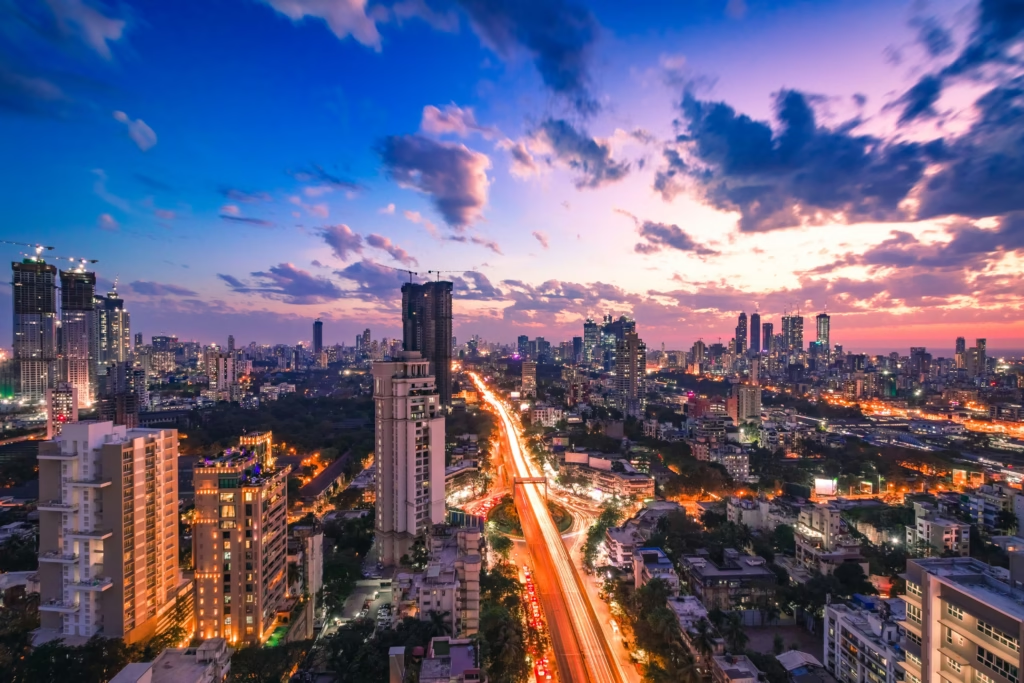
Mumbai Night Skyline

Borivali vs Kandivali — Which Has Better Appreciation?

Borivali vs Kandivali — Which Has Better Property Rate Appreciation? Table of Contents When comparing Borivali vs Kandivali for property investment, most buyers ask one question: Which area gives better appreciation? The honest answer is simple:It depends more on entry price, micro-location, and holding period than on the suburb name. Borivali offers stability and capital safety.Kandivali offers higher upside in selected pockets. This guide explains the difference clearly—without hype. Borivali vs Kandivali Comparison Borivali provides steady, low-risk appreciation, while Kandivali offers higher growth potential in select locations over long-term holding periods. Summary: Borivali → Stable, safer returns Kandivali → Better upside, higher variation Best results → Right price + right location + patience Why Most Buyers Misjudge Property Appreciation in Mumbai Many buyers focus only on today’s price. Experienced investors think about: What this price can become in 7–10 years How demand will evolve Whether the area will upgrade In Mumbai, appreciation is: Slow Uneven Location-sensitive Understanding this prevents costly mistakes. Also Read: City vs Suburb: Where to invest? Borivali Real Estate Investment Guide: Stability and Long-Term Value Borivali is one of the most established residential suburbs on Mumbai’s western line. It benefits from: Strong railway and metro connectivity Well-developed social infrastructure Proximity to green spaces Large family-oriented population Most buyers here plan to live long-term. This makes Borivali a “settlement market,” not a speculative one. How Property Prices Appreciate in Borivali Borivali grows through consistency. Main drivers: Continuous end-user demand Limited land availability Regular redevelopment projects Strong livability index As a result, prices rise steadily over time. There are few sharp spikes, but very few major crashes. Limitations of Borivali for High Capital Appreciation Because Borivali is mature: Prices are already stabilized Major infrastructure is complete Growth is mostly incremental High entry cost reduces returns If you expect rapid doubling of value, Borivali may feel slow. It is designed for safety, not aggressive growth. Kandivali Real Estate Investment Guide: Growth and Emerging Opportunities Kandivali lies between Malad and Borivali and has transformed rapidly over the last decade. It offers: New residential projects Growing commercial zones Expanding metro connectivity Better price-to-space ratio Many buyers choose Kandivali for better entry value. Also Read: Western Express Highway vs Eastern Express Highway Why Kandivali Has Higher Property Appreciation Potential Kandivali is still in a transition phase. It is moving from “developing” to “established.” This creates opportunity because: Base prices are lower Neighborhoods are upgrading Infrastructure is improving Younger buyers are moving in Historically, such areas deliver stronger long-term appreciation. Risks of Investing in Kandivali Property Higher potential comes with higher risk. In Kandivali: Performance varies street to street Project quality differs widely Some pockets stagnate Wrong selection limits returns Without research, upside can disappear. Kandivali rewards preparation, not guesswork. Borivali vs Kandivali Property Appreciation Comparison Table Borivali offers low-risk steady growth. Kandivali offers higher upside in select locations. Factor Borivali Kandivali Demand Stability High Medium–High Price Volatility Low Medium Entry Cost Higher Lower Growth Potential Moderate Higher (Selective) Risk Level Low Medium How Entry Price Affects Real Estate Returns Appreciation depends heavily on buying price. Example: Buying Borivali at peak rates = lower returns Buying Kandivali at fair value = higher returns Even if both reach similar prices later, percentage gain differs. Key Rule:Buying right matters more than buying “prime.” Rental Yield and Its Impact on Long-Term Appreciation Borivali offers stable family rentals. Kandivali offers improving mixed-tenant rentals. Borivali rentals: Predictable Limited growth Kandivali rentals: Faster improvement in growing pockets Higher future potential Better rental performance supports resale value. Also Read: Rental Yield in Mumbai Who Should Invest in Borivali for Property Appreciation Borivali suits you if: You want low risk You prefer capital protection You may live there later You value stability Best for conservative investors and end-users. Who Should Invest in Kandivali for Property Appreciation Kandivali suits you if: You get a good entry deal You have 8–12 years horizon You research locations You accept some variation Best for growth-oriented buyers. Importance of Micro-Location in Borivali and Kandivali Micro-location decides success. Always evaluate: Distance to metro or station Road connectivity Quality of surrounding buildings Access to schools and markets Future development plans A strong Kandivali pocket can outperform a weak Borivali lane. Suburb name is secondary. Location is primary. Practical Investment Tips for Better Appreciation Focus on entry price Study neighborhood growth Avoid hype-driven launches Check builder credibility Think long-term Remember:Steady areas protect money. Transitioning areas grow money. Final Verdict: Borivali vs Kandivali — Which Is Better for Appreciation? There is no universal winner. Borivali gives: Security Consistency Long-term confidence Kandivali gives: Opportunity Flexibility Higher growth potential The right choice depends on your risk profile and goals. The real mistake is buying without clarity. FAQs 1. Which area has better appreciation: Borivali or Kandivali? Borivali offers steady growth. Kandivali can outperform in selected pockets over time. 2. Is Borivali safer than Kandivali for long-term investment? Yes. Borivali has stronger end-user demand and lower downside risk. 3. Can Kandivali give higher returns than Borivali? Yes, in the right locations with long-term holding. 4. Does lower entry price in Kandivali improve returns? Yes. Lower entry prices usually lead to better percentage appreciation. 5. Which area is better for rental-based appreciation? Kandivali in developing pockets. Borivali for stable family rentals. 6. Is Borivali fully developed for price growth? Mostly. Growth is gradual and predictable. 7. Are redevelopment projects better in Borivali or Kandivali? Borivali often benefits more due to prime old locations. 8. Which suburb is better for first-time investors? Usually Kandivali due to lower entry and more options. 9. How important is micro-location? Extremely important. It matters more than suburb name. 10. What is the biggest mistake buyers make? Buying based on reputation instead of real value. Good appreciation depends on: Right price Right location Right timeline Borivali offers steady growth. Kandivali can outperform in selected pockets over time. Yes. Borivali has stronger end-user demand and lower downside risk. Yes, in the right locations with long-term holding. Yes. Lower entry prices usually

Borivali vs Kandivali — Which Has Better Appreciation? Read More »

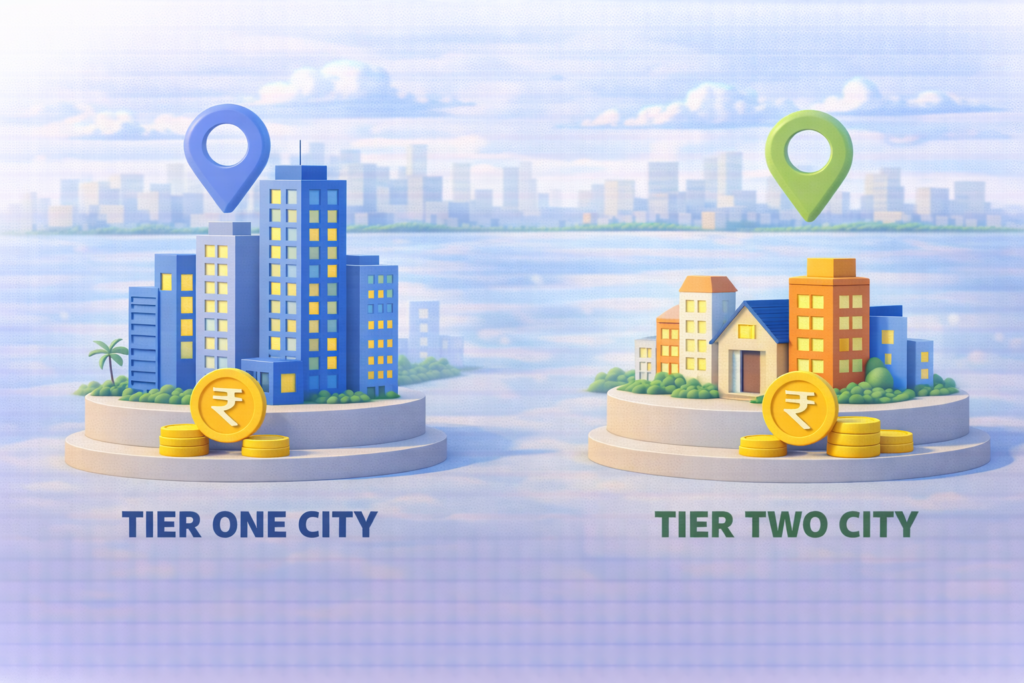
tier 1 city vs tier 2 city

Tier I vs Tier II Cities: Where Should You Invest?

Tier I vs Tier II Cities: Where Should You Invest? Table of Contents Tier 1 city vs Tier 2 city is no longer just a budget question it’s a timing and temperament question.A tier 1 city offers stability, liquidity, and predictable demand but limited upside.A tier 2 city offers affordability and growth potential, but requires patience and location discipline. What to remember:Tier I cities protect wealth. Tier II cities can grow wealth—if you enter early and hold long enough. If you’re confused between Tier I and Tier II cities, you’re thinking correctly. A decade ago, this choice was obvious. Today, it isn’t.Work patterns have changed. Infrastructure has spread outward. Aspirations have shifted. And yet, the risks haven’t disappeared—they’ve only changed shape. So instead of asking “Which is better?”, let’s ask the smarter question: Which one fits your money, timeline, and mental comfort? What Do Tier I and Tier II Cities Actually Mean? In India, the difference between a tier 1 city and a tier 2 city is not about prestige—it’s about economic maturity. A tier 1 city typically has: Large, diversified job markets International connectivity Mature real estate prices High demand but limited new land A tier 2 city usually has: Emerging industries and education hubs Lower property prices Infrastructure catching up A growing aspirational population This difference defines how property behaves over time. Also Read: Mumbai Property Rates Why Tier I Cities Still Feel “Safe” There’s a reason most people instinctively trust a tier 1 city. You’re buying into: Established demand Strong rental markets Easier resale Even during slowdowns, Tier I markets don’t freeze completely. Transactions slow—but they don’t vanish. Why this matters When you’re investing a large amount, emotional stability matters. Tier I cities reduce the risk of regret, even if they don’t deliver excitement. The Reality Check on Tier I City Investments Here’s the part buyers realise later: Entry prices are already stretched Rental yields are modest Appreciation is gradual, not dramatic In many Tier I locations, future growth is already built into today’s price. You’re buying maturity, not momentum. Also Read: Renting vs Buying in Mumbai  Why Tier II Cities Are Attracting Attention A tier 2 city feels like an opportunity. Lower prices mean: Easier entry Bigger homes Less EMI pressure Add improving airports, highways, universities, and IT parks—and the story sounds compelling. And sometimes, it is. The Risk That Comes with Tier II Cities The biggest risk isn’t price fall.It’s overestimating speed. Development in Tier II cities happens unevenly: One pocket grows fast Another stagnates for years Rental markets take time. Resale liquidity is thinner. Exit options are fewer. This is where many investors lose patience—and confidence. Tier 1 City vs Tier 2 City: Rental Reality Rental demand is stronger and more consistent in Tier I cities, while Tier II cities often need years before rentals stabilise. If rental income matters from day one, Tier I cities are usually more dependable.Tier II rentals improve only after job ecosystems deepen. Who Should Invest in a Tier I City? A tier 1 city suits buyers who: Want predictable rentals May exit within 5–7 years Prefer liquidity over upside Are investing a large share of net worth This is often right for: Conservative investors First-time buyers with tight timelines People nearing retirement Who Should Invest in a Tier II City? A tier 2 city works for those who: Have a long holding horizon Don’t rely on immediate rental income Are comfortable with slower exits Want capital appreciation over time Typically suitable for: Younger investors End-users planning future relocation Investors with surplus capital Also Read: Rental Yield in Mumbai The Middle Ground Most People Ignore Not all Tier II cities are equal—and not all Tier I locations are expensive. Smart investing lies in: Tier II cities with strong education or industrial bases Micro-markets already seeing real demand Locations where people are already buying to live, not speculate Labels matter less than ground reality. Practical Takeaways If liquidity matters, Tier I cities are safer If budget matters, Tier II cities offer relief Never invest in a Tier II city based only on future promises Always assess job growth, not just infrastructure plans Rule of thumb: If you can’t wait, don’t go Tier II. If you can wait calmly, Tier II can reward you. Conclusion The tier 1 city vs tier 2 city decision isn’t about choosing the “smarter” option.It’s about choosing the appropriate one. Tier I cities give certainty. Tier II cities offer possibility.Neither is wrong—only mismatched expectations are. If this clarity helps you feel steady rather than rushed, you’re already making a better investment decision. FAQs Is investing in a Tier I city always safer? Generally, yes—but safety comes at a cost.Tier I cities offer stable demand and easier exits, but price appreciation is slower. Safety here means fewer surprises, not higher returns. Can Tier II cities outperform Tier I cities in returns? Yes, over long periods.A well-chosen tier 2 city can outperform if job growth and infrastructure actually materialise. The key word is well-chosen. Which is better for rental income? Tier I cities usually provide more reliable rental income than Tier II cities. Tier II rental markets improve gradually and depend heavily on employment growth. Are Tier II cities risky for first-time buyers? They can be—if expectations are short-term.Tier II cities work better for first-time buyers planning long-term self-use rather than quick resale or rental income. How do I evaluate a Tier II city before investing? Focus on: Job creation, not just infrastructure Presence of universities, hospitals, industries Actual population movement, not projections If people are moving in to live, not just invest, that’s a good sign. Generally, yes—but safety comes at a cost.Tier I cities offer stable demand and easier exits, but price appreciation is slower. Safety here means fewer surprises, not higher returns. Yes, over long periods.A well-chosen tier 2 city can outperform if job growth and infrastructure actually materialise. The key word is well-chosen. Tier I cities usually provide more reliable rental income than

Tier I vs Tier II Cities: Where Should You Invest? Read More »

mumbai east or west

Western Express Highway vs Eastern Express Highway — Which Side of Mumbai Is Better to Live On?

Which Side of Mumbai Is Better to Live On? WEH Vs EEH Table of Contents The choice between Western Express Highway and Eastern Express Highway shapes daily life more than most buyers realise.If you are deciding Mumbai east or west, the western side generally offers a better lifestyle, higher resale demand, and stronger rental markets.The eastern side offers better affordability, shorter commutes to central business districts, and improving infrastructure. What you should remember:The West gives comfort and liquidity. East gives value and practicality. The right side depends on how you live and work. If you’re confused between Mumbai’s East and West, you’re not alone. Also Read: Western Suburbs vs Eastern Suburbs Almost every serious buyer in the city reaches this point.Friends say “West is better.”Brokers say “East is developing fast.”Budgets say “Be practical.” Somewhere in between, you’re trying to figure out what actually works for you. Let’s step away from opinions and look at this like someone who has travelled these roads, lived in these areas, and dealt with traffic, rentals, and resale realities. Understanding What “East” and “West” Really Mean in Mumbai In Mumbai, the railway line is the real divider. On one side is the Western corridor, supported by the Western Express Highway.On the other side is the Central corridor, supported by the Eastern Express Highway. These highways influence: Connectivity Property pricing Office access Lifestyle patterns When people ask about mumbai east or west, they are really asking which ecosystem suits them better. Living on the Western Express Highway Side of Mumbai The western side of Mumbai has traditionally been more popular with home buyers. It includes well-known residential belts and strong social infrastructure. When you live closer to the Western Express Highway, you usually benefit from: Better access to business districts and airports More developed residential neighbourhoods Strong retail, schools, and hospitals Higher rental demand This side has evolved over decades as a preferred residential zone. Also Read: Renting vs Buying in Mumbai Why this matters Areas that people have trusted for years tend to hold value better and attract tenants faster. Advantages of Living on the Western Side of Mumbai If you choose the western corridor, you usually get: Easier access to corporate hubs Better lifestyle amenities Higher resale liquidity Strong professional tenant base This is why many people automatically lean towards the west when buying. A home here feels “safe” in both emotional and financial terms. Limitations of the Western Side of Mumbai The downside is cost. Western-side properties are expensive.Entry prices are high.Space is limited. Traffic congestion is also intense in many pockets, especially near commercial zones. You often pay more for location than for actual living comfort. In simple terms: you buy convenience, not spaciousness. Living on the Eastern Express Highway Side of Mumbai The eastern corridor has changed dramatically in the last decade. Earlier seen as industrial or secondary, it is now home to many large residential projects and improving infrastructure. Living near the Eastern Express Highway gives you: Better access to central Mumbai Faster routes to business districts like BKC and Lower Parel More affordable housing options Newer townships and societies For many practical buyers, this side makes financial sense. Also Read: Packers and Movers Charges  Advantages of Living on the Eastern Side of Mumbai The biggest strength of the east is value. You generally get: Larger homes for the same budget Newer buildings Better amenities in many projects Less pressure on pricing For middle-income families and first-time buyers, this can be a major advantage. Why this mattersLower financial stress improves quality of life more than many people realise. Limitations of the Eastern Side The east still faces perception issues. Some pockets are crowded.Social infrastructure is uneven.Rental demand is improving but not uniform. In certain areas, markets, schools, and hospitals are still developing. Location selection becomes very important here. Mumbai City vs Mumbai Suburban: How This Fits In When people compare mumbai city vs mumbai suburban, they are often mixing two things: work location and residence. Mumbai city areas are closer to historic business zones, while suburban areas offer more residential options. Both highways serve suburban Mumbai more than the core city. Most buyers today live in suburbs and commute. So the real question is:Which suburban side makes your daily life easier? Commute and Work Location Impact This is where many decisions should start. Your work location should strongly influence whether you choose the eastern or western corridor. If you work in: Western suburbs, media, IT, airport zones → West suits better BKC, Lower Parel, Central Mumbai → East often works better Choosing the wrong side can add years of commuting stress. Price Comparison: East vs West Properties on the western corridor are generally more expensive than those on the eastern corridor. Broadly: West = higher price, higher demand East = better value, improving demand This gap exists because of historical development patterns. It is narrowing, but slowly. Rental and Resale Performance Rental and resale matter even if you plan to live in the house. Western side: Faster rentals Higher tenant demand Quicker resale Eastern side: Improving rentals Slower resale in some pockets More dependent on micro-location If flexibility matters to you, the west feels safer. Who Should Prefer the Western Mumbai Living near the Western Express Highway suits you if: You value lifestyle and convenience You may rent out in future You want easier resale Budget is comfortable This suits professionals, investors, and buyers with higher purchasing power. Who Should Prefer the Eastern Mumbai Living near the Eastern Express Highway suits you if: You want better value You prefer larger homes You work in central Mumbai You want lower EMIs This suits first-time buyers, families, and long-term end-users. The Importance of Micro-Location This cannot be stressed enough. In both corridors: One station makes a big difference One road changes livability One bad junction increases stress A good eastern pocket can outperform a weak western one. Always judge the exact location, not just “East” or “West”. Practical Takeaways Choose based

Western Express Highway vs Eastern Express Highway — Which Side of Mumbai Is Better to Live On? Read More »

Seraphinite AcceleratorOptimized by Seraphinite Accelerator
Turns on site high speed to be attractive for people and search engines.